

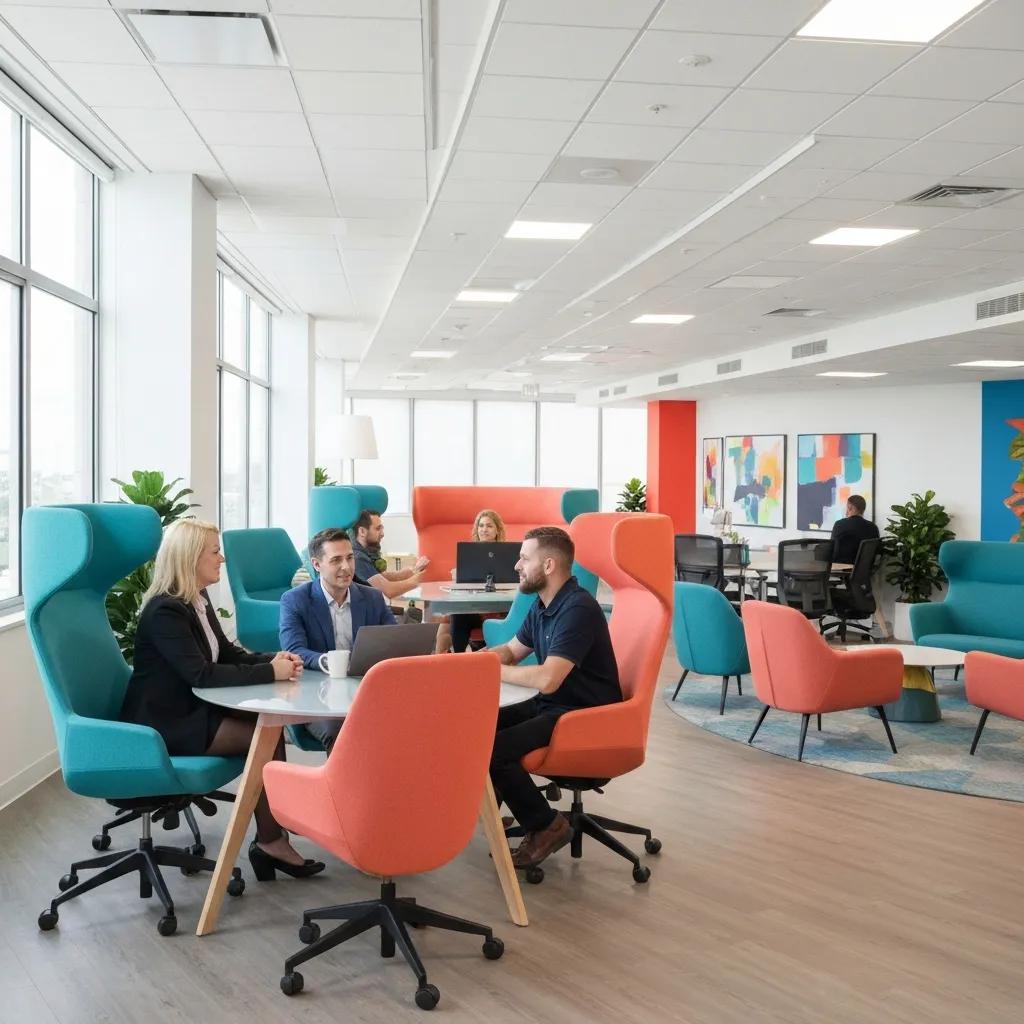
Thoughtful commercial office design in Preston brings purposeful planning, ergonomics and brand-led interiors together so teams work better and your business looks the part. This page explains what good office design delivers, the typical refurbishment stages Preston firms follow, the 2025 trends affecting Lancashire workplaces, common cost drivers and budgeting tips, plus local project examples that show measurable results. Many Preston employers are balancing hybrid working, sustainability and technology — clear design and space-planning decisions make those trade-offs manageable while improving productivity and staff wellbeing. Read on for practical guidance on workspace planning, 3D visualisation, cost drivers and how to choose a fit-out partner — with straightforward next steps if you’d like a free consultation in Preston. The content uses local examples, industry best practice and actionable lists to help you plan a successful office refurbishment.
Quick invite: if you’d like a no-obligation design conversation for a Preston project, a short CTA below explains how to request a free consultation.
Professional commercial office design turns spatial constraints and operational headaches into a workplace that supports productivity, reinforces your brand and adapts to flexible working. Designers use practical solutions — space planning, ergonomic furniture and acoustic zoning — to tackle common issues such as hot‑desking confusion, poor air quality and awkward circulation. The outcomes are tangible: fewer interruptions, clearer collaboration zones and environments that help staff perform and stay well. Recent research linking daylight, ergonomics and lower absenteeism underpins the approach we use for Preston projects.
Office design creates value across strategic, operational and human areas. Below are the core benefits Preston organisations typically see.
The primary benefits are:
These benefits feed each other: a better environment supports performance, which helps business results and staff retention.
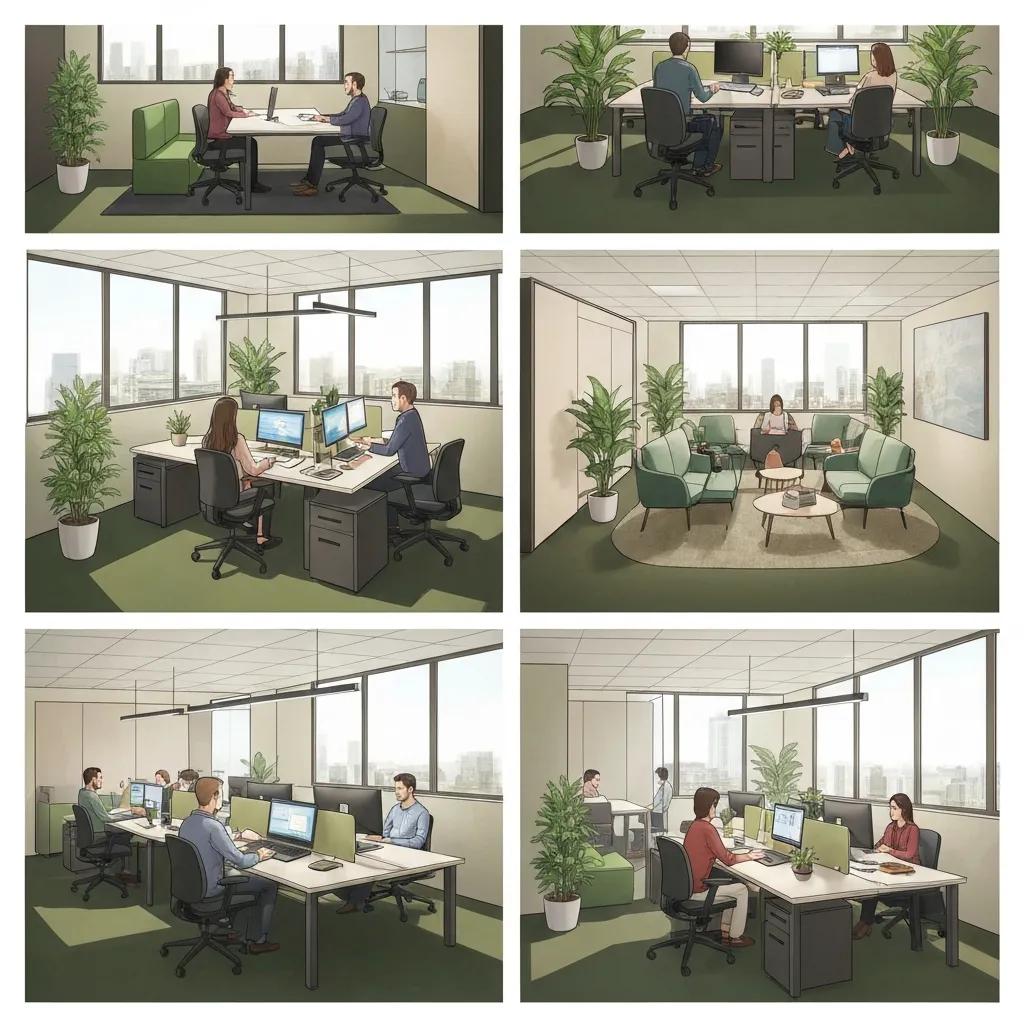
Office design improves productivity and wellbeing by combining ergonomic solutions, daylight optimisation and acoustic control to lower cognitive load and physical strain. Ergonomic furniture and considered workstation layouts reduce repetitive strain and discomfort. Daylighting strategies and biophilic touches support circadian rhythms and focus. Acoustic zoning cuts distractions in deep‑work areas while collaborative hubs encourage spontaneous interaction without disturbing concentration. Together, these measures help reduce absenteeism and sustain team performance.
Seeing how these elements work explains why workplace design is an operational investment, not just decoration. The next section shows how design choices also express your brand.
Research shows that bringing nature into the workplace can reduce stress and improve overall wellbeing.
Reducing Employee Stress Through Biophilic Design in Urban Workplaces
This thesis explores how green public spaces and biophilic design can reduce stress for urban workers. It argues that architecture should connect people with nature, drawing on environmental psychology and restorative environment principles to offer practical strategies for healthier, more sustainable urban workplaces.
Reducing Employee Stress through Biophilic Design in Public Spaces: An Architectural and Psychological Approach, 2024
How can office design reflect your brand identity effectively?
Office design reflects brand identity when materials, colour palettes, signage and circulation patterns are chosen to support your values and the story you want to tell visitors. Durable finishes, coordinated accents and a welcoming reception area communicate professionalism at a glance. Spatial choices — open collaboration hubs versus enclosed client suites — also signal how your business handles transparency, privacy and teamwork.
Use a short checklist to test alignment between design and brand.
Design decisions that mirror your values make daily operations more coherent and help visitors understand what your company stands for. That naturally leads into the end‑to‑end design and refurbishment process below.
A full office design and refurbishment in Preston follows a clear sequence: consultation and needs analysis, site survey and measurements, space planning and 3D visualisation, procurement and furniture supply, installation and project management, then handover and aftercare. Each stage produces specific outputs that reduce risk, clarify scope and set expectations for cost and timing. The process emphasises iterative reviews and stakeholder engagement so the final workspace fits operational needs and brand intent.
Below is a concise process table summarising the typical deliverables and client benefits at each stage.
This process table explains deliverables and outcomes for clients considering a fit‑out.
This structured approach helps clients know what to expect at each milestone and reduces surprises during delivery.
The numbered steps below summarise the practical sequence an organisation will experience during refurbishment.
These steps speed decision‑making and keep the project transparent from start to finish.
For Preston businesses seeking hands‑on support, Lomas Office Furniture provides a free, no‑obligation consultation, CAD/3D visualisation and end‑to‑end project management including furniture supply and full installation. Once you approve a design, a single partner handles procurement, scheduling and on‑site installation to simplify delivery and reduce coordination. To request a quote or arrange a complementary consultation, use the local contact channels to start the conversation.
The free consultation and needs analysis clarifies operational goals, user numbers, desired outcomes and any regulatory or technical constraints that affect scope. A consultant will typically review floor plans, carry out a site visit or remote survey, interview key stakeholders and confirm budget and timeline expectations. The outcome is a concise needs brief that shapes space planning scenarios and helps prioritise must‑haves versus nice‑to‑haves.
Clients should prepare occupancy numbers, current pain points and any technical requirements such as AV cabling or accessibility needs.
A clear needs analysis reduces scope creep and provides the basis for accurate cost estimates and phased delivery options.
Space planning and 3D design use CAD layouts and photorealistic renders to test multiple configurations and finish options, improving space efficiency and stakeholder buy‑in. Visualisation lets clients confirm sightlines, circulation and furniture arrangements before procurement, while iterative reviews refine acoustics, lighting and ergonomics.
Space‑maximising strategies include multi‑use zones, retractable partitions and optimised storage to increase usable workspace without expanding floor area. 3D models act as clear communication tools for contractors and suppliers, reducing on‑site changes during installation.
Bringing digital design in early reduces change orders and helps teams picture the finished environment, which speeds approvals and procurement.
The leading office design trends for Preston in 2025 focus on wellbeing, flexibility, sustainability and technology integration to support hybrid work and future‑proof operations. Biophilic features, zoned activity spaces, sustainable materials and smart‑office systems are top priorities for organisations seeking resilience and measurable savings.
Below is a table that compares the major trends, their primary benefits and practical examples relevant to Preston businesses.
This table helps compare trends by benefit and practical implementation.
These trends deliver tangible benefits that local employers can prioritise based on budget and operational goals.
Actionable priorities for 2025 include:
Adopting these priorities helps Preston businesses meet employee expectations and manage running costs more effectively.
Biophilic design brings natural elements into the workplace to reduce stress, improve mood and support cognitive performance. Simple steps include potted plants, living walls and natural finishes; larger changes might improve daylight access and natural ventilation.
Benefits also include better perceived air quality and a stronger sense of connection to nature, which research links to lower stress and higher job satisfaction.
Both low‑cost and higher‑cost biophilic options let organisations of any size introduce nature in sustainable ways.
Understanding these options helps balance maintenance, upfront cost and long‑term wellbeing returns.
Evidence shows that adding natural elements to the workplace can positively affect employee performance and wellbeing.
The Impact of Biophilic Design on Employee Performance and Well-being
This study examines how direct and indirect biophilic indicators affect employee wellbeing and performance. The research designs an instrument to measure the human–nature connection in workplace settings and how that connection influences outcomes such as mood, stress and productivity.
Investigating the impact of biophilic design on employee performance and well-being by designing a research instrument, L Alipour, 2024
Flexible, zoned workspaces matter because hybrid working needs distinct environments for focused tasks, collaboration and social interaction. Zoning separates high‑concentration areas from collaboration hubs and meeting rooms, cutting cross‑traffic noise and improving task fit.
Modular and mobile furniture lets teams reconfigure spaces as needs change, while acoustic screens and planting define zones without permanent walls.
Designing for flexibility reduces the need for frequent, costly refurbishments as business needs evolve.
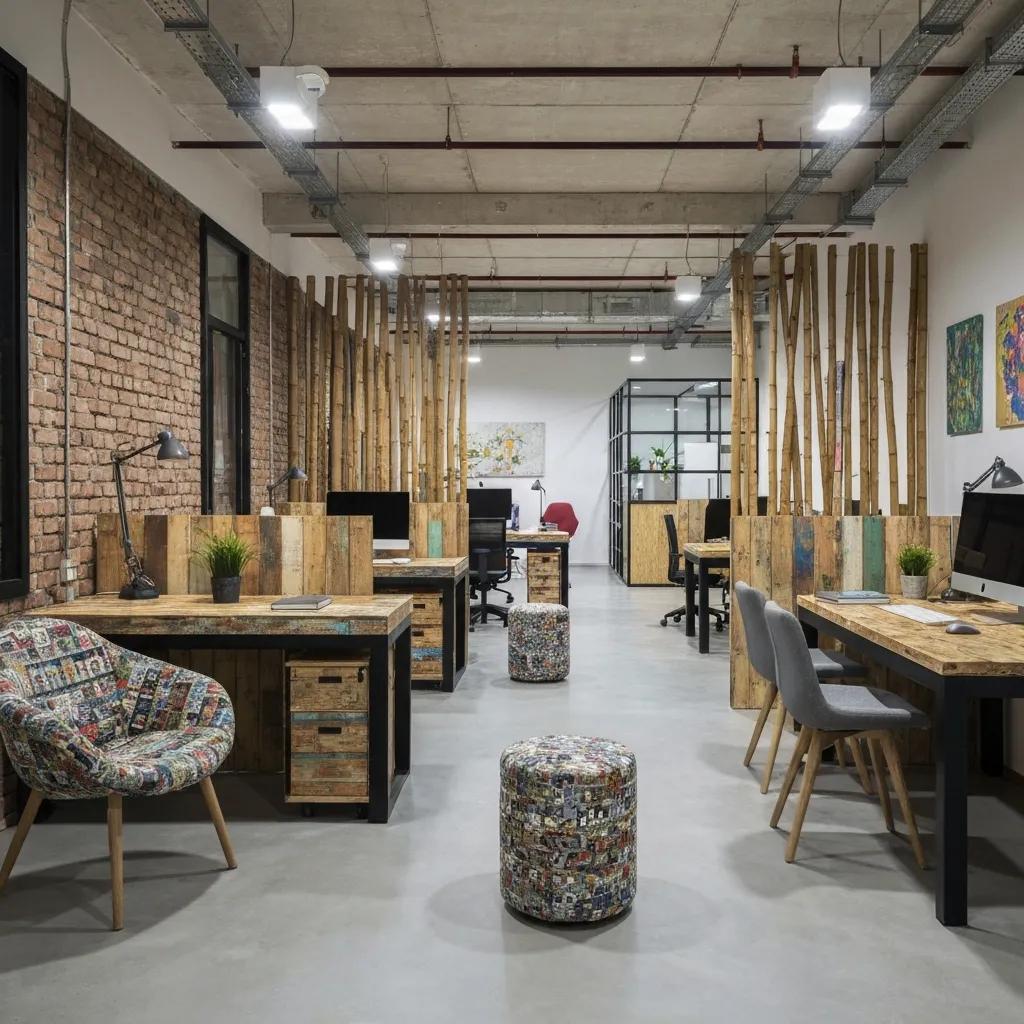
Sustainable solutions include specifying recycled or remanufactured furniture, choosing low‑emission finishes and installing energy‑efficient LED lighting with smart controls. These choices reduce embodied carbon and cut ongoing energy bills, improving environmental performance and operational costs.
Procurement strategies that favour circular‑economy options and longer lifecycle furniture balance upfront spend against total cost of ownership.
Sustainable measures also support CSR reporting and can be phased to fit budgets.
Smart offices add conferencing systems, room‑booking tools and IoT sensors to monitor space use and guide future design decisions.
Small offices may focus on integrated AV and reliable conferencing; larger workplaces should plan cabling, power and sensor networks during refurbishment to avoid expensive retrofits.
Smart controls for lighting and heating deliver immediate energy savings and provide data for future space optimisation.
Including technology early in the fit‑out ensures systems are coherent and scalable.
Costs vary widely depending on scope, finishes, structural changes and technology requirements. Typical small‑to‑medium refurbishments range from modest reconfigurations to full fit‑outs with bespoke furniture and AV. Key price drivers include square footage, finish level, the extent of M&E work and lead times for specified furniture. Transparent budgeting and phased delivery help manage cashflow and let you prioritise high‑return items like ergonomics and energy‑efficient systems.
The cost table below shows common cost categories and how they typically influence a project budget.
Knowing the main cost drivers helps clients decide where to invest for the best operational and financial returns.
Key factors that typically influence pricing include:
A pragmatic approach phases high‑impact changes first and schedules lower‑priority items later so you spread cost while getting early benefits.
Pricing depends on square footage, the complexity of mechanical and electrical works, accessibility and compliance requirements, and lead times for bespoke furniture and materials. Structural changes such as relocating services or adding meeting rooms increase cost because of extra trades and permit requirements.
High‑spec finishes and custom joinery also raise budgets, as do advanced AV and IoT systems.
Procurement choices — local stock versus bespoke import — affect both cost and delivery time.
Identifying these drivers early supports accurate quotes and sensible trade‑offs between cost and performance.
To budget well, prioritise ergonomics, energy efficiency and flexible zones that directly affect productivity and running costs. Create a phased plan tackling critical improvements first — for example, workstation ergonomics and lighting — then schedule aesthetic or lower‑impact items later.
Measure ROI with KPIs such as space utilisation, employee retention and productivity changes to justify investment.
Negotiating fixed‑price packages for furniture supply and installation reduces exposure to unexpected costs.
A staged approach lowers the initial outlay and delivers early returns, while tracking KPIs validates the refurbishment over time.
Local case studies show how joined‑up design, procurement and installation deliver measurable improvements for Preston organisations. Strong projects present a clear client challenge, a tailored design response and quantifiable outcomes such as more usable workspace or better collaboration. Highlighting a few representative projects with before/after descriptions and measured benefits fills a common information gap and demonstrates local experience.
Below are short case summaries that illustrate typical project templates and outcomes from our local work.
Project A: A mid‑sized professional services firm needed clearer zoning and a stronger client reception. We reconfigured circulation, created a dedicated reception hub and specified ergonomic workstations.
Outcomes included better meeting utilisation and positive client feedback on the professional look and feel.
Project B: A growing tech team required flexible collaboration areas and quieter focus zones. The design introduced modular furniture, acoustic screens and phone booths, increasing usable desk density while protecting quiet spaces.
Outcomes included improved space utilisation and higher staff satisfaction.
Each mini case shows how integrated design, furniture supply and installation deliver operational improvements aligned with business goals.
Preston clients commonly report measurable benefits after a refurbishment: better space utilisation, higher staff satisfaction and clearer client‑facing spaces that strengthen brand perception.
Typical improvements include fewer conflicts over space, more efficient meeting use and smoother daily workflows.
Short client feedback often highlights the convenience of having one supplier manage design, supply and installation, which reduces coordination burdens.
If you’d like a tailored quote for a Preston project, Lomas Office Furniture can share a portfolio of relevant projects and provide a targeted proposal after a free consultation to assess scope and budget.
Designing for hybrid working means prioritising flexibility, clear technology integration and employee wellbeing. Spaces should support both focused and collaborative work and allow quick transitions between modes. Reliable video conferencing, room‑booking systems and good IT infrastructure are essential. Ergonomic furniture and biophilic elements make the workspace more comfortable and productive for everyone.
To make a design sustainable, choose eco‑friendly materials, energy‑efficient lighting and furniture made from recycled or responsibly sourced materials. Use smart controls to monitor and reduce energy use, and design for longevity with durable, modular furniture that adapts as needs change. Working with suppliers who prioritise sustainability will strengthen your environmental credentials.
Employee feedback is crucial: it reveals real needs and preferences so the workspace supports productivity and wellbeing. Surveys or focus groups identify pain points and desired features like quiet zones or collaboration areas. Involving staff in the process builds ownership and usually improves satisfaction and engagement.
Measure success with KPIs such as employee satisfaction, productivity metrics and space utilisation rates. Run surveys before and after the project to capture perception changes, and track absenteeism and turnover for longer‑term impact. Regularly review these metrics to guide incremental improvements.
Biophilic design reduces stress, improves mood and can support cognitive performance. Introducing natural elements — plants, daylight and organic materials — creates a more appealing work environment. Studies link these features to increased productivity and job satisfaction, making biophilic design a practical investment in wellbeing.
Review office spaces every 3–5 years, depending on shifts in workforce patterns, technology and business needs. Regular assessments help identify improvements and keep the workspace aligned with organisational goals. Listening to employee feedback and monitoring trends will tell you when an update is due.
Hiring local experts gives you faster site visits, established supplier relationships and knowledge of regional regulations and supply chains that reduce lead times and on‑site surprises. Local teams coordinate deliveries efficiently, respond quickly to site questions and provide timely aftercare. Their understanding of local planning norms and access to regional trades helps ensure smooth project delivery. A local provider’s responsiveness often lowers overall project risk and keeps momentum from design through to handover.
This local advantage improves stakeholder communication and speeds resolution of on‑site issues during installation.
Choose a fit‑out company using a clear buyer’s checklist that balances portfolio relevance, process transparency, warranties and aftercare. Assess providers on recent local projects, evidence of project management, clear fixed‑price proposals and a commitment to post‑install support. Ask for references, review CAD/3D capabilities and confirm the supplier can manage procurement and installation to reduce coordination work for you.
Following these steps reduces procurement risk and speeds project delivery.
Evidence shows that adding natural elements to the workplace can boost productivity and improve the overall environment.
Biophilic Design Enhances Worker Productivity and Improves the Environment
A range of studies indicate that integrating nature into workspaces — through daylight, vegetation and natural materials — can have a positive effect on worker productivity. The biophilia concept suggests an innate human preference for nature, and research estimates productivity gains in such environments.
The impact of biophilic designs on worker efficiency, S Topgül, 2019
One practical next step for Preston businesses ready to explore options is to request a free, no‑obligation consultation. Lomas Office Furniture can arrange a site visit, prepare a CAD‑led proposal and provide a costed quote tailored to your requirements.