

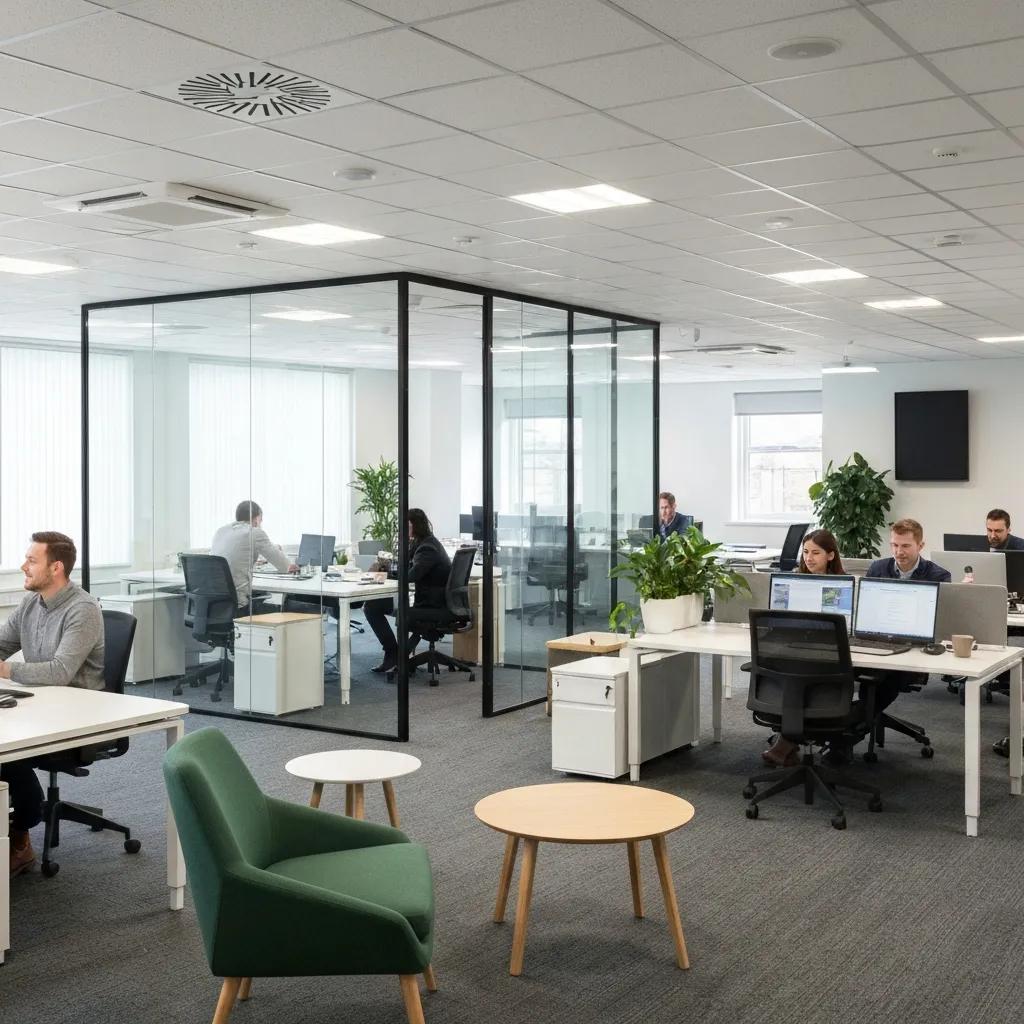
Thoughtful office design in Accrington turns underused space and tired layouts into workplaces that boost productivity and support staff wellbeing while suiting modern ways of working.
This guide shows how professional office design services tackle common local issues — inefficient space use, poor acoustics and rigid layouts — and gives clear steps to plan, deliver and measure a successful refurbishment.
Read on to understand the end-to-end process for a commercial office fit-out in Accrington, the design features that improve productivity and wellbeing, and how workplace consultancy and technology help make hybrid working work.
We cover space planning, CAD visualisation, furniture selection, installation and realistic timelines, plus practical checklists and comparison tables tailored for Accrington businesses.
To keep the guidance locally useful, we reference key search terms such as office design Accrington, workspace design Accrington and office furniture installation Accrington where relevant.
By the end you’ll know how to assess providers, prioritise changes and request a free local consultation to start a project.
Professional office design in Accrington combines targeted space planning, evidence-based wellbeing measures and organised installation to deliver measurable business benefits. Good design cuts time lost to inefficient layouts, improves concentration with better acoustics and lighting, and increases usable capacity without costly expansion. That translates into clearer productivity gains and helps with recruiting and retaining staff. Experienced teams use tools like CAD and occupancy analysis to produce layouts that match real workflows, while managed installation reduces disruption and cost overruns. The outcome is a workplace that supports your business goals — efficiency, wellbeing and flexibility — and suits the hybrid working patterns common in 2025. Below are the core benefits to expect when you work with a professional office design team in Accrington.
What office design delivers in practice:
These changes produce clear, measurable ROI in manageable steps, helping local businesses prioritise the most effective upgrades.
Lomas Office Furniture serves Blackburn and nearby towns and offers a one-stop approach covering design, furniture supply and installation for Accrington firms. We provide free, no-obligation consultations and use CAD-led space planning so you can see layouts before installation, reducing changes on site. Our experienced installers handle on-site assembly and handover, and our e-commerce and logistics capabilities help with fast parts supply and tight deadlines. Lomas aims to be a practical local partner, offering competitive pricing, next-day delivery where available, and a customer-first approach that smooths common procurement issues.
These elements illustrate the integrated approach we recommend; for Accrington teams planning a refurbishment, booking the free consultation is a sensible first step to get a tailored plan.

Expert design improves productivity and wellbeing by focusing on the environmental and ergonomic factors that affect performance: daylight and task lighting, acoustics, layout and furniture quality. Daylight optimisation and good task lighting increase alertness and reduce eye strain, while acoustic zoning cuts interruptions that break concentration. Ergonomic furniture reduces musculoskeletal issues and absence, and biophilic touches lower stress and improve comfort. Recent research (2024–2025) shows these interventions lead to measurable gains in focus and staff satisfaction. Start with a baseline assessment, then target interventions you can measure with occupancy and satisfaction surveys — that helps you focus budget where it delivers the strongest impact.
The impact of biophilic design on employee wellbeing and performance
This study looked at how direct and indirect biophilic features — like plants, natural materials and daylight — affect employee wellbeing and performance, testing a new survey instrument to capture those effects.
A clear, staged office design and refurbishment process in Accrington runs from discovery to handover and keeps disruption to a minimum while delivering measurable outcomes. It usually begins with an initial consultation and needs assessment, moves through CAD-based space planning and specification, proceeds to procurement and installation, and finishes with user orientation and a post-occupancy review. Each stage produces tangible outputs — a project brief, visual renders, procurement schedules and snagging lists — that reduce risk and keep the project on track. Local providers combine knowledge of Accrington properties with managed logistics so projects run smoothly even for smaller footprints. Below is a concise step-by-step overview designed for quick clarity.
This staged approach clarifies responsibility, reduces surprises and sets measurable milestones for any Accrington fit-out.
Consultations collect stakeholder views, workflow observations and occupancy data to form a project brief that guides design choices. Typical discovery activities include stakeholder interviews, site walkthroughs, utilisation studies and identifying technical constraints such as services, access and fire routes. Deliverables usually include a project brief, initial layouts and a high-level budget estimate that highlights interventions with quick ROI. For small businesses, simple usage logs and a list of required functions give consultants what they need to produce realistic layout options and costed proposals. Clear discovery work ensures later CAD and procurement align with actual user needs, not assumptions.
CAD turns a project brief into precise 2D and 3D plans that reveal spatial relationships, circulation paths and furniture fit before any work starts. High-fidelity visualisations show how layouts perform for occupant flow and allow clash detection with building services, reducing costly rework. Clients can review renders to choose finishes and furniture, speeding approvals and enabling accurate procurement lists. For Accrington projects, CAD also helps with compliance checks and gives installers scaled drawings for efficient on-site work. Using CAD like this reduces uncertainty and shortens the timeline from concept to completion.
Furniture selection balances ergonomics, sustainability and budget to deliver durable, comfortable work settings that match the design concept. Project management schedules procurement, delivery and on-site work, assigning responsibility for logistics and health & safety to minimise business disruption. Skilled installation teams handle assembly, power and data routing, snagging and a formal handover with user orientation and warranty information. Post-install support commonly includes a short rectification period and a scheduled post-occupancy review to validate outcomes and address minor adjustments. These steps convert design intent into a functioning workplace with predictable timescales and clear accountability.
Modern commercial office design in Accrington focuses on a few core elements that together support productivity, flexibility and environmental goals. These include biophilic design for wellbeing, ergonomic and sustainable furniture for long-term value, flexible hybrid workspace zoning for changing work patterns, and integrated smart technology for comfort and efficient use. Each element produces measurable benefits — for example, biophilic strategies reduce stress while smart controls cut energy use — and should be combined to match business priorities. Below is a quick comparison of essential design elements to help decision-makers weigh benefits.
Biophilic design brings natural elements — plants, timber finishes and better daylight — into the workplace to support mental recovery and focus. Recent studies show access to greenery and natural light links to lower stress and improved cognitive performance, which can mean fewer sick days and higher engagement. Low-cost interventions for small offices include potted plants, placing desks to make the most of daylight and using natural-material finishes that are easy to maintain. Follow a simple maintenance plan to protect long-term benefits. Biophilic measures work best when combined with acoustic and lighting strategies for a rounded improvement in environmental quality.
Economic benefits of biophilic design for productivity and wellbeing
This paper examines the economic case for biophilic design in workplaces, showing how strategic use of natural elements can boost productivity while supporting employee wellbeing as a cost-effective investment.
Ergonomic furniture reduces fatigue and injury by adapting to users’ needs, while sustainable choices support environmental targets through responsible materials and longer lifecycles. Prioritise adjustable desks, chairs with good lumbar support and sit‑stand options to lower absence and increase comfort, especially for hybrid teams. Sustainable selections focus on recycled content, low‑VOC finishes and furniture take‑back or recycling programmes. When procuring, weigh upfront cost against lifespan and warranty — investing more in ergonomics often delivers clear ROI via reduced absence and improved productivity. Use clear specifications to balance budget and long-term value.
Flexible and hybrid solutions use zoning, modular furniture and simple booking tools to match changing occupancy without large capital spending. Zoning separates collaboration areas, quiet focus zones and social spaces, while modular furniture lets you reconfigure quickly as needs change. Desk‑booking or calendar-based room scheduling helps allocate resources and measure utilisation for future planning. Quick wins for Accrington SMEs include modular benching, mobile screens and a basic booking system to manage hot‑desking. These steps make hybrid working practical without major infrastructure changes.
Smart tech such as occupancy sensors, adaptive lighting and reliable AV systems ties comfort, efficiency and hybrid meeting capability into the design. Sensors deliver utilisation data that informs space planning and switches systems to energy-saving modes when rooms are empty. Smart lighting and climate controls improve comfort and lower running costs. For hybrid meetings, simple, dependable conferencing kits plus acoustic treatments make sessions more productive. Plan for future upgrades and user training so systems deliver the expected operational gains.
A well-run fit-out or refurbishment changes how your workspace performs by aligning layout, finishes and services with business aims and environmental targets. Fit-outs can reclaim unused circulation space, add collaboration zones, upgrade lighting and HVAC controls, and replace tired furniture with ergonomic options to improve experience and efficiency. Projects should include a clear programme of works, realistic timescales and staged handovers to protect business continuity. Below is a comparison of common fit‑out activities, typical timeframes and expected benefits to set realistic expectations.
Before the table, here are common fit-out scopes and why they matter.
Professional space planning improves utilisation, safety and the employee experience by analysing how people actually use space and recommending targeted changes. Utilisation studies reveal underused areas and suggest desk ratios or flexible solutions that can avoid the need for more real estate. Space planning also covers accessibility and health & safety compliance, ensuring layouts meet regulations while improving navigation and emergency egress. For small offices, simple steps such as reorganising storage and creating zoned work areas often deliver immediate functional gains. A clear space plan also supports accurate procurement and a smoother installation phase.
Sustainable fit-outs prioritise low‑embodied‑carbon materials, energy‑efficient systems and waste reduction during refurbishment to meet corporate ESG aims. Practical steps include specifying low‑VOC finishes, sourcing furniture with recycled content and planning for reuse or responsible disposal of removed items. Energy‑efficient lighting and smart controls cut operational emissions and can generate savings that offset capital costs over time. Local incentives in 2025 may support certain measures, making sustainability both a compliance and cost-management choice. Integrating sustainability early ensures durable solutions that match long‑term values.
When choosing local renovation companies for an Accrington project, focus on credentials, commercial refurbishment experience and structured project management. A practical vetting checklist includes checking insurance and warranties, reviewing portfolios and references, confirming timelines and snagging procedures, and asking about post‑install support. Query suppliers on procurement, site logistics and how they handle unexpected building issues to assess problem‑solving ability. Clear contracts with defined deliverables and payment milestones protect both parties and simplify expectation management. This approach reduces risk and encourages timely, accountable delivery.
Workplace consultancy complements design and fit‑outs by aligning space and policy with business objectives. Core offerings include workplace strategy, employee engagement and change management, utilisation analysis and technology planning for hybrid work. These services produce tangible outputs — zoning plans, policy documents and training — that help new designs deliver lasting benefits. Below is a comparison of common consultancy services, typical deliverables and measurable outcomes to help you choose the right support.
The table below explains consultancy services and expected outcomes.
Employee wellbeing should guide choices about lighting, acoustics, temperature control and restorative spaces because these factors strongly affect engagement and retention. Wellbeing-led interventions include quiet focus zones, well‑ventilated breakout areas and access to daylight and greenery to support mental recovery. Measure improvements with staff surveys, absence data and engagement scores to validate investment. Low-cost actions like better task lighting and noise masking often deliver quick wins, while larger changes such as flexible work zones give sustained benefits when paired with supportive policies. Prioritising wellbeing ensures design choices directly support organisational performance.
Recommended hybrid solutions balance cost, flexibility and ease of use. Small businesses often gain most from modular furniture, a simple desk‑booking tool and adaptable meeting rooms. Larger teams can combine bookable collaboration zones with permanent neighbourhoods for core groups to keep team cohesion. Choose technology that’s simple and reliable — consistent AV standards and straightforward booking integrations reduce friction for remote participants. Policies and cultural change are as important as hardware: clear rules on desk use, meeting etiquette and availability help hybrid working stick. Together, these measures make hybrid working practical and measurable.
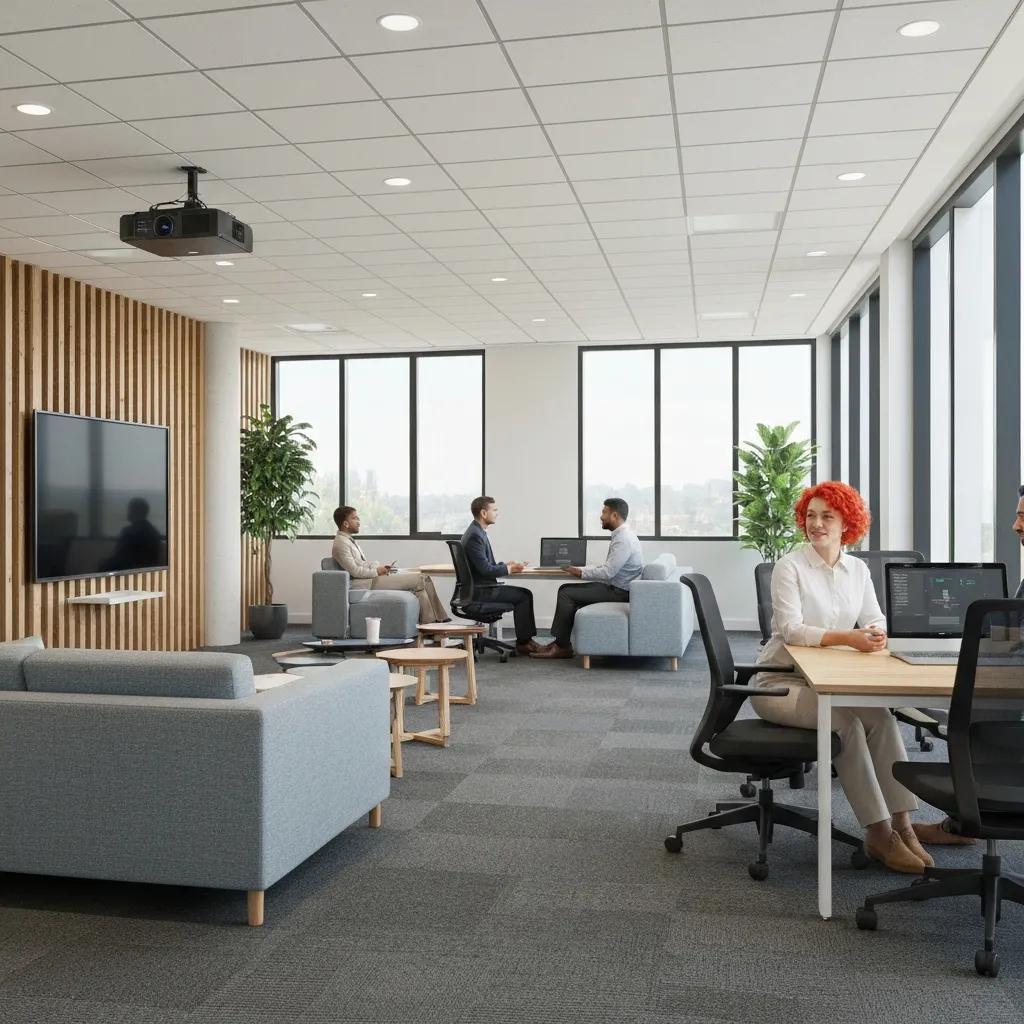
Technology improves collaboration and efficiency by simplifying meetings, supplying utilisation data and automating environmental controls to suit occupancy. Prioritise conferencing systems with reliable audio and simple camera setup, occupancy sensors to inform planning and smart controls that cut energy use. Integration includes specification, cabling and commissioning, followed by user training and a short evaluation period to measure time saved and reduced travel. Measured ROI examples include fewer unnecessary meetings, lower travel costs and better meeting punctuality, which add up across teams. A clear tech roadmap prevents over‑specification and keeps value front of mind.
Seeing examples of successful projects and getting expert advice are key when choosing a provider for an Accrington refurbishment. Local case summaries show how design solved specific challenges and what measurable improvements followed, while a consultation translates those lessons into a plan for your workspace. Below are concise case‑style summaries, followed by FAQs and a clear invitation to request a free office design consultation with a local provider.
Here are brief, anonymised case summaries from Lancashire‑area projects that show typical outcomes. Each follows challenge → solution → outcome so decision‑makers can see the benefits quickly. Case studies commonly report better desk utilisation, reduced absence and improved team collaboration. Before‑and‑after photos or CAD renders help stakeholders understand the transformation and aid approvals.
Biophilic design matters because natural elements — plants, daylight and natural materials — improve wellbeing and concentration. Evidence links these features to lower stress, fewer sick days and higher engagement. Beyond wellbeing, biophilic choices can support sustainability goals and make workplaces more attractive to staff and visitors.
Small businesses benefit by making the most of limited space: smarter layouts improve flow, ergonomics reduce discomfort and user-friendly design lifts morale. Good planning can avoid costly expansion and improve day‑to‑day efficiency. Working with local designers ensures solutions are practical and aligned with your needs.
Technology supports collaboration, efficiency and comfort. Occupancy sensors and automated lighting save energy, while simple AV systems make hybrid meetings work smoothly. The right technology should be reliable and easy to use so it helps people work better, not creates more friction.
Employee input is essential. Surveys and focus groups reveal real pain points and preferences so design addresses how people actually work. Involving staff early increases buy‑in and helps ensure new layouts and policies are adopted successfully.
Sustainability covers material choices, energy efficiency and waste management. Choose low‑VOC finishes, recycled or responsibly sourced furniture and energy‑saving systems. Plan to reuse or responsibly dispose of old items. Sustainable design reduces environmental impact and often lowers running costs over time.
Typical challenges include limiting disruption to daily operations, keeping to timelines and budgets, and handling unexpected site issues. Good project management, clear contracts and experienced contractors make a big difference. Local knowledge helps navigate planning and logistics smoothly.
Measure success with employee satisfaction surveys, productivity indicators and absence rates. Post‑occupancy evaluations, utilisation data and feedback sessions show whether the design meets objectives. Set clear goals and metrics before work begins so you can track real impact.
Requesting a free consultation with Lomas is a straightforward first step to improve your Accrington office. Before the meeting, prepare a short brief listing current challenges, staff numbers and desired outcomes. In the consultation expect a needs assessment, an initial discussion of constraints and likely solutions, and a clear outline of next steps including CAD visualisations and a proposal. After the visit Lomas will usually follow up with a written brief, design renders, furniture options and an indicative timeline for procurement and installation. The free consultation gives you a no‑obligation plan tailored to your priorities and budget.
Following these steps helps turn design ideas into a practical project plan with clear milestones and measurable outcomes.