
Quality office furniture directly impacts employee productivity, health, and your company’s professional image. For Lancashire businesses, selecting the right furniture involves balancing immediate costs with long-term value. High-quality office furniture typically lasts 10–15 years with proper maintenance, whilst ergonomic pieces can reduce workplace injuries by up to 40% and boost productivity by 25%.
The challenge lies in identifying quality pieces amongst countless options. Many Lancashire businesses struggle to balance cost constraints with the need for durable, functional furniture that serves their teams effectively over time. This guide provides practical evaluation criteria to help you make informed decisions that deliver excellent value and support your business objectives.
Quality furniture with proper warranties offers superior long-term value compared to cheaper alternatives requiring frequent replacement. Understanding key quality indicators ensures your investment supports your team’s success for years to come.
Key Takeaways
- Material quality determines longevity – Solid wood, quality veneer, and commercial-grade laminate outlast cheaper alternatives.
- Ergonomic features protect employee health – Adjustable seats, lumbar support, and proper desk height prevent workplace injuries.
- Construction methods reveal durability – Dovetail joints, quality hardware, and reinforced corners indicate superior craftsmanship.
- Warranties signal confidence – Reputable manufacturers offer 10-15 year warranties on quality pieces.
- Certifications ensure standards – BIFMA and Greenguard certifications guarantee safety and performance.
Understanding Quality Materials: The Foundation of Lasting Furniture
Material quality forms the foundation of any durable office furniture investment. Solid wood varieties, including oak, maple, and walnut, provide exceptional strength, natural beauty, and the ability to be refinished multiple times throughout their lifespan. These materials typically support 15-year service lives when properly maintained.
Quality veneer offers the aesthetic appeal of solid wood whilst maintaining cost efficiency. Look for veneer properly bonded to medium-density fibreboard or particleboard substrates. Commercial-grade laminate surfaces resist scratches, stains, and daily wear, making them ideal for high-use work surfaces and conference tables.
Metal components deserve equal attention when evaluating furniture quality. Steel frames, aluminium supports, and quality hardware determine overall structural integrity. Check material thickness, finish consistency, and connection quality during showroom visits.
During evaluation, examine grain patterns in wood for consistency, inspect laminate edges for smoothness, and test metal connections for stability. Solid wood materials such as oak, maple, and walnut are valued for their strength, natural beauty, and ability to be refinished, highlighting their investment value compared to particleboard alternatives lasting only 3-5 years.
Quality materials provide the foundation, but proper assembly determines whether furniture delivers on its potential.
Construction Quality: Recognising Superior Craftsmanship
Superior construction methods distinguish quality furniture from inferior alternatives. Dovetail joints, dowel connections, and reinforced corners indicate careful craftsmanship designed for longevity. These techniques create stronger, more stable connections compared to basic staples or lightweight fasteners.
High-quality hardware impacts daily functionality and long-term durability. Heavy-duty drawer slides operate smoothly under repeated use, whilst quality hinges maintain proper alignment over thousands of opening cycles. Cabinet doors and drawers should close securely without gaps or misalignment.
Inspect construction quality systematically during evaluations. Test moving parts for smooth operation without binding or resistance. Check joints for tightness and absence of gaps. Examine hardware mounting and assess overall stability when moderate pressure is applied.
| Quality Indicator | Good Construction | Poor Construction |
|---|---|---|
| Joints | Dovetail, dowels, reinforced | Staples, basic screws |
| Hardware | Heavy-duty slides, quality hinges | Lightweight, plastic components |
| Stability | No wobbling, solid feel | Movement when pressure is applied |
| Internal Structure | Solid framework, bracing | Minimal support, hollow feel |
Internal frameworks provide stability, often overlooked during casual inspection. Quality pieces incorporate solid bracing and proper weight distribution to prevent wobbling or structural failure over time. Poor construction typically relies on minimal internal support, creating hollow-feeling pieces prone to premature failure.
Proper construction methods support another important quality aspect: ergonomic functionality.
Ergonomic Features: Protecting Employee Health and Productivity
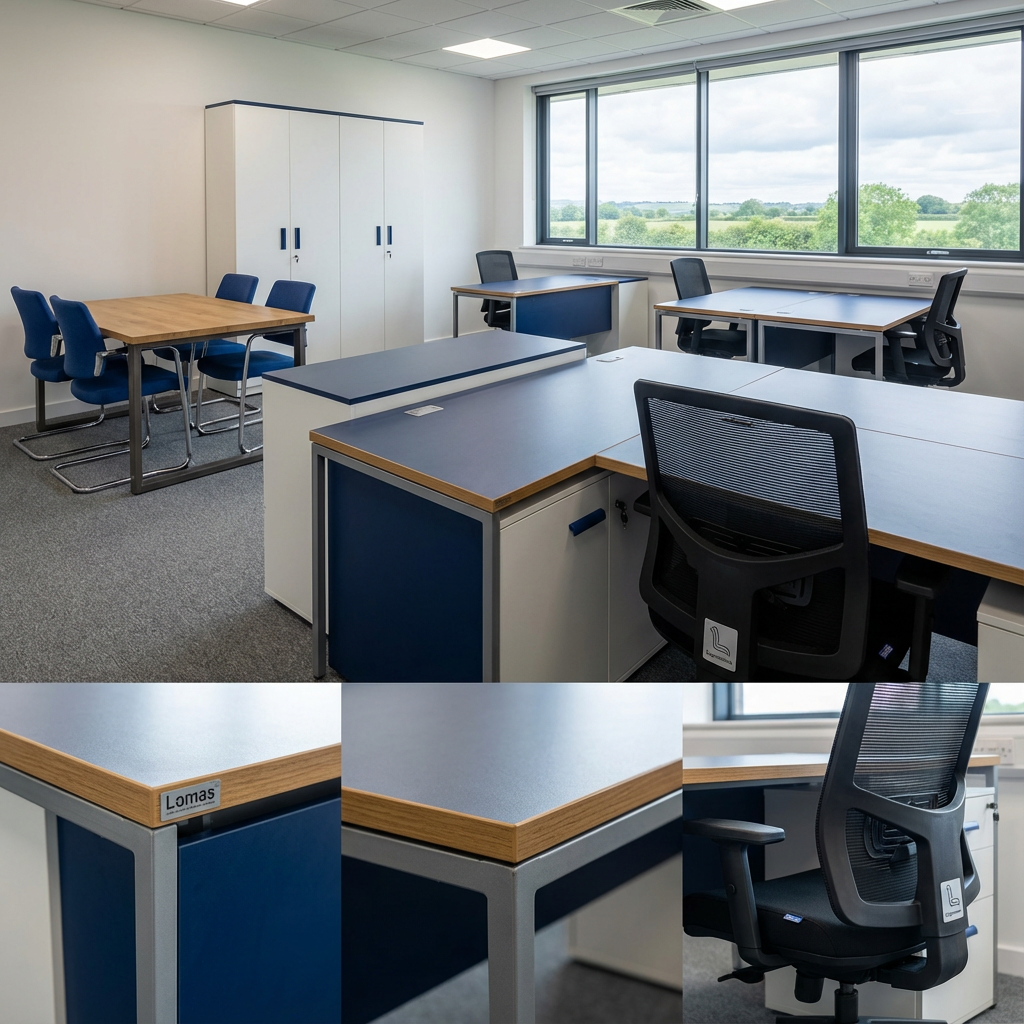
Ergonomic design separates quality office furniture from basic alternatives whilst protecting your most valuable business asset: your team’s health and productivity. Adjustable seat height mechanisms allow proper leg positioning with feet flat on the floor, reducing pressure points and improving circulation throughout long work periods.
Lumbar support maintains the spine’s natural curve, preventing lower back strain that affects 80% of office workers at some point. Quality chairs provide adjustable lumbar support, accommodating different body types and preferences. Seat depth and width must support thighs without creating pressure behind knees.
Adjustable armrests positioned at the proper height and width prevent shoulder and neck strain whilst supporting arms during typing and mouse use. Five-legged chair bases with appropriate castors provide stability and mobility across different flooring surfaces.
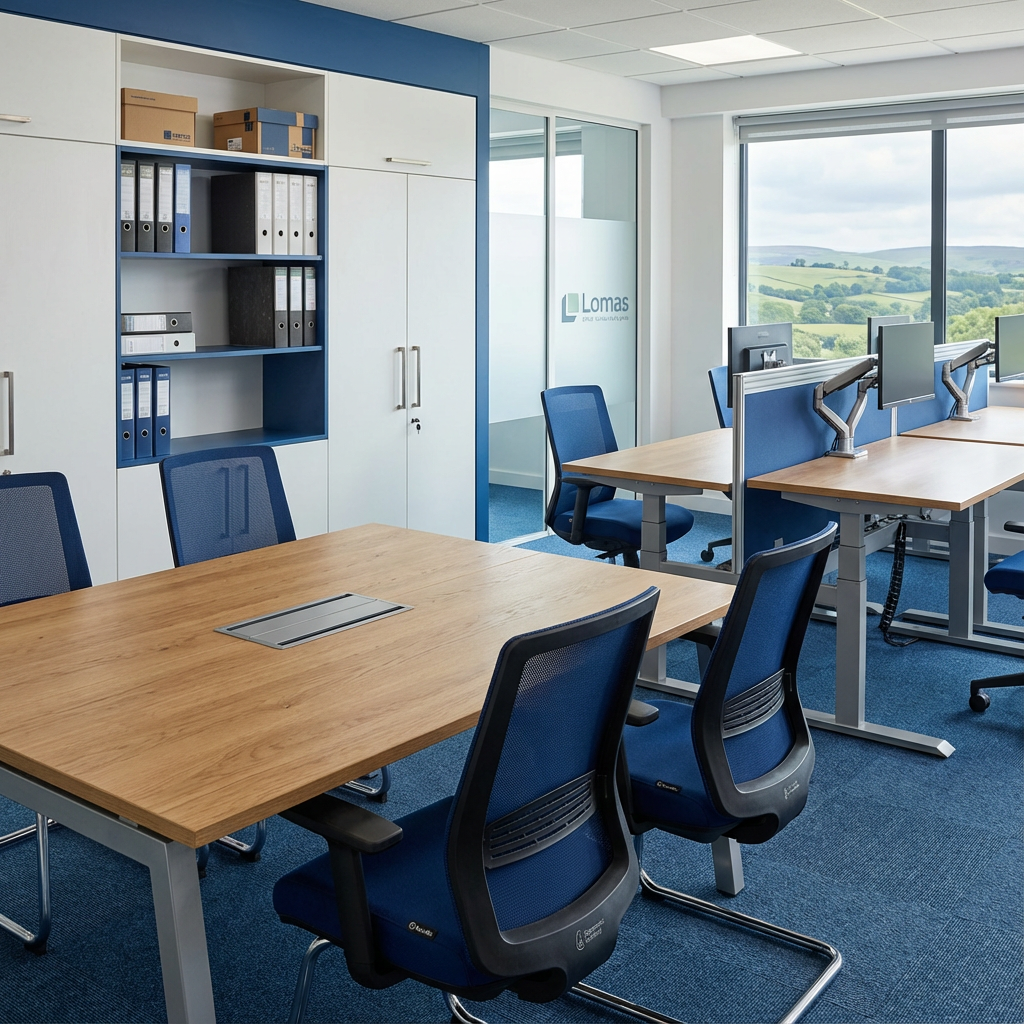
Height-adjustable desks facilitate movement between sitting and standing positions, promoting better circulation and reducing repetitive strain. Monitor arms and keyboard trays position screens at eye level and keyboards at proper height, preventing neck and wrist strain during computer work.
ANSI/BIFMA and HFES 100 standards emphasise adjustability ranges and accommodation of diverse user sizes. Quality ergonomic furniture includes multiple adjustment points rather than fixed dimensions. Ergonomic office furniture can reduce workplace injuries by up to 40% and increase productivity by 25%, making these features essential investments rather than optional extras.
These ergonomic features must withstand daily use, highlighting the importance of durability considerations.
Durability Indicators: Ensuring Long-Term Value
Warranty periods serve as primary indicators of manufacturer confidence in their products. Reputable brands typically offer 10-15-year warranties on quality pieces, reflecting their durability expectations. Compare warranty terms carefully, noting coverage limitations and required maintenance conditions.
BIFMA certification ensures furniture meets rigorous industry standards for durability, safety, and performance. This certification involves extensive testing for structural integrity, stability, and material quality. Greenguard certification indicates low emissions and healthier indoor air quality, particularly important for enclosed office environments.
High-quality chairs and desks typically last 10–15 years with proper maintenance, making them sound long-term investments compared to cheaper alternatives requiring replacement every 3-5 years. Calculate total cost of ownership including replacement frequency, disposal costs, and productivity impacts during furniture failures.
Quality materials contribute to durability expectations. High-density particleboard, high-pressure laminate, and abrasion-resistant fabrics enhance longevity when properly maintained. Regular cleaning, timely repairs, and appropriate usage patterns extend furniture lifespan considerably.
Understanding these durability indicators helps evaluate suppliers and make informed purchasing decisions for your Lancashire business.
Making Smart Purchasing Decisions in Lancashire
Supplier evaluation requires a systematic assessment of credentials, certifications, and after-sales support capabilities. Request detailed warranty information, maintenance requirements, and replacement part availability. Conduct site visits to assess showroom quality and staff expertise.
Budget planning should account for the total cost of ownership over the expected furniture lifespan. Quality furniture delivering 60% better value over 10 years, despite higher upfront costs, makes financial sense for most businesses. Consider financing options for larger purchases whilst maintaining cash flow flexibility.
Coordinate furniture purchases with office moves, renovations, or team expansions to maximise efficiency and potential volume discounts. Request samples for materials evaluation and staff feedback before finalising specifications.
Create detailed furniture specifications, including material requirements, ergonomic features, warranty expectations, and delivery timelines. Clear specifications ensure suppliers understand your quality expectations and enable accurate cost comparisons.
Investing in Quality for Long-Term Success
Quality office furniture represents a strategic investment supporting employee satisfaction, productivity, and professional image. Evaluate materials, construction methods, ergonomic features, and durability indicators systematically to ensure long-term value. Prioritise comprehensive warranties, recognised certifications, and proven supplier reliability over short-term cost savings. Your furniture choices directly impact daily operations and team wellbeing, making quality selection essential for sustained business success.
Frequently Asked Questions
How long should quality office furniture last? Quality office furniture typically lasts 10-15 years with proper maintenance. Solid wood and commercial-grade materials can often exceed this timeframe with appropriate care and occasional refinishing.
What certifications should I look for when buying office furniture? Look for BIFMA certification, ensuring safety and performance standards, and Greenguard certification, indicating low emissions. These certifications guarantee furniture meets rigorous industry requirements for durability and indoor air quality.
Is expensive office furniture always of better quality? Not necessarily. Focus on materials, construction methods, warranties, and certifications rather than price alone. Some mid-range furniture offers excellent quality, whilst some expensive pieces may lack proper construction or ergonomic features.
How can I test office furniture quality before purchasing? Test moving parts for smooth operation, check joints for stability, examine hardware quality, and assess overall construction. Request samples for materials evaluation and consider trial periods for chairs and desks.
What’s the most important ergonomic feature in office furniture? Adjustability is important. Look for chairs with adjustable height, lumbar support, and armrests. For desks, proper height and adequate legroom matter most. Multiple adjustment points accommodate different users and working preferences.