
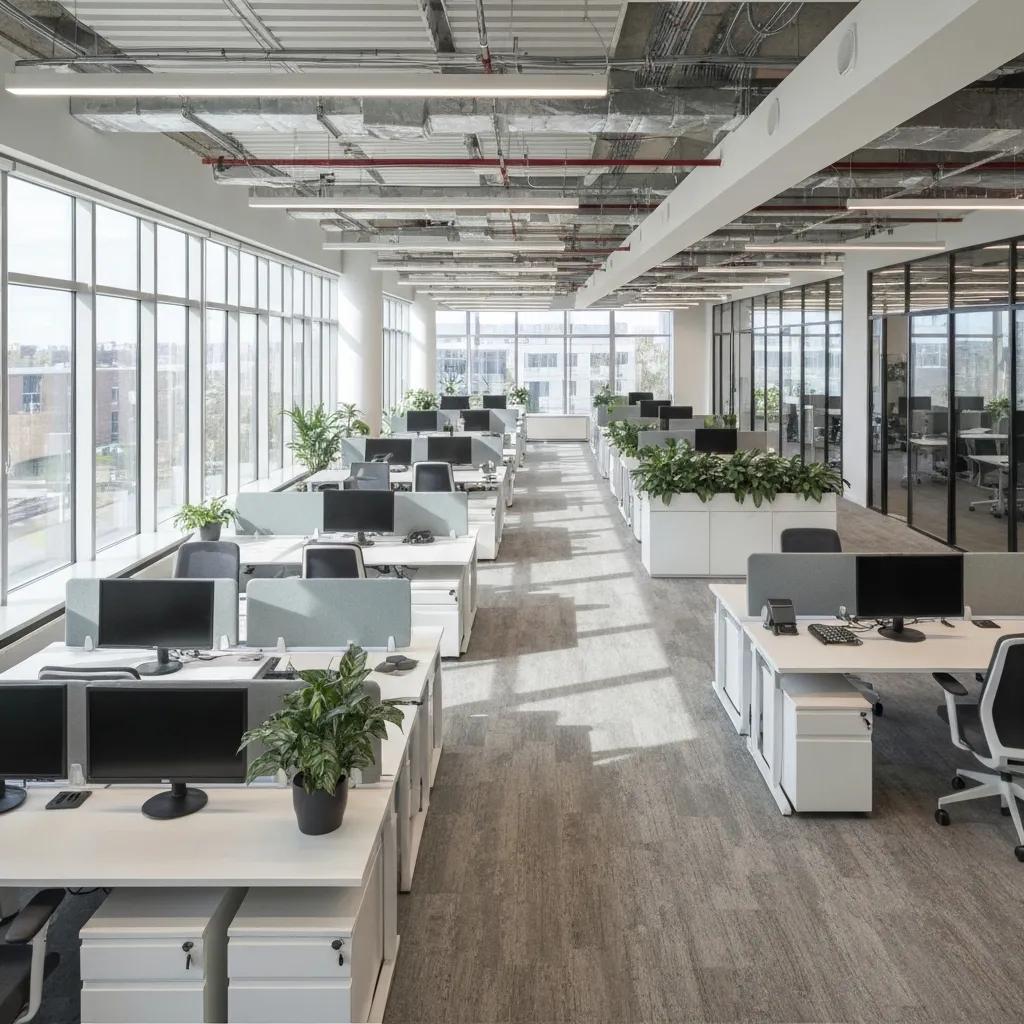
Good office design shapes how people work, feel and connect. At its best, design brings together smart space planning, ergonomic furniture and environmental controls to deliver measurable gains in productivity and staff wellbeing for Pendle businesses. This guide explains what professional office design looks like, why a local approach matters in Pendle, and how evidence-led changes — from layout tweaks to ergonomic specification — improve space use and employee retention. You’ll find the key benefits of investing in design, 2025 trends to watch, practical workspace-planning tips and furniture choices that balance comfort with cost. The advice applies to large fit-outs and small-business updates alike, and points to when a site survey or CAD visualisation is the sensible next step. Keywords like office design Pendle, workspace planning Pendle and office refurbishment Pendle are woven through to help local decision-makers find useful, actionable guidance.
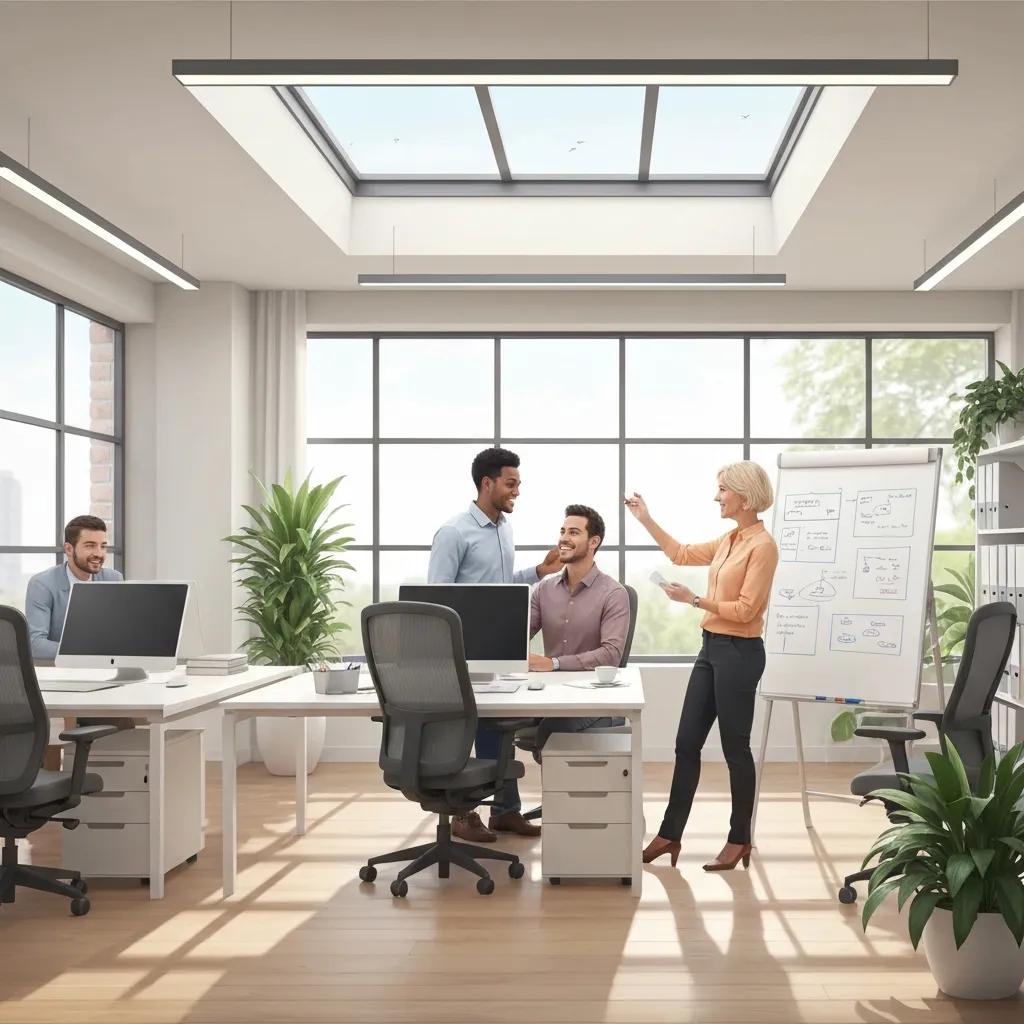
Professional office design in Pendle blends spatial analysis, ergonomic specification and environmental controls to boost productivity, support wellbeing and make space work harder for you. Aligning layout with daily workflows and introducing better furniture, lighting and acoustic treatments reduces fatigue, improves concentration and increases usable capacity—delivering clear, measurable returns. Local knowledge and a data-driven method mean solutions suit regional building types and commute patterns, which helps staff adopt new layouts more quickly.
Office design delivers tangible advantages for organisations:
The table below links benefits to measurable outcomes and typical metrics you can track.
Mapping benefits to metrics makes it easier to prioritise interventions. From there, the logical next step is to understand how an experienced supplier structures project phases to deliver consistent results.
Design improves performance by tackling the physical, environmental and organisational factors that affect focus and comfort. Ergonomic furniture reduces musculoskeletal strain, while good lighting and air quality support concentration and reduce errors. Acoustic treatments and deliberate zoning create quiet areas for focused work alongside collaboration zones that limit interruptions. Together these measures make daily work easier and more sustainable — which is why a tailored, locally informed design works well for Pendle businesses.
Localised design recognises the types of buildings, travel patterns and community expectations common to Pendle, producing solutions that are practical and culturally appropriate. Site surveys and local supplier knowledge cut delivery and installation friction, shortening project timelines and reducing surprises on site. Using regional materials and design cues can strengthen your brand’s local identity while keeping work within planning and building constraints. That local understanding also helps sequence installation to minimise disruption.
We follow a clear, structured process that combines consultation, CAD visualisation and full-service delivery so Pendle clients move confidently from brief to handover. Our work starts with a free, no‑obligation consultation and site survey to define needs, then CAD-based space planning to test layouts and sightlines before any purchase. Once designs are agreed, Lomas handles supply, delivery and full installation, coordinating trades and quality checks to keep projects running smoothly across Lancashire and Pendle. Below are the project phases, deliverables and typical timelines so clients know what to expect during a refurbishment or fit-out.
The implementation sequence Lomas uses is designed to limit disruption and provide clear milestones for clients:
The timeline table helps you plan for staged installation or temporary moves to keep business operations running. Next we outline what the consultation and space-planning stage typically includes.
Our consultation and space-planning stage combines site observation, stakeholder interviews and workflow analysis to produce CAD-backed options that match your objectives. Deliverables usually include measured floorplans, multiple layout proposals, ergonomic furniture specifications and cost guidance to support decisions. The process identifies activity zones, adjacency needs and pinch points so final plans support both focused work and collaboration. Clear deliverables at this stage reduce the chance of late changes and improve the likelihood of an on‑time, on‑budget delivery.
Project management brings together trades, manages delivery schedules and enforces quality checks so disruption is minimal and timelines remain predictable. A single project coordinator handles communications between client, contractors and suppliers while running daily site checks and handover tests. We mitigate risk with contingency planning for lead‑time delays and phased installation strategies that keep your business operational. Aftercare and warranty documentation complete the service, ensuring any post‑installation issues are resolved quickly.
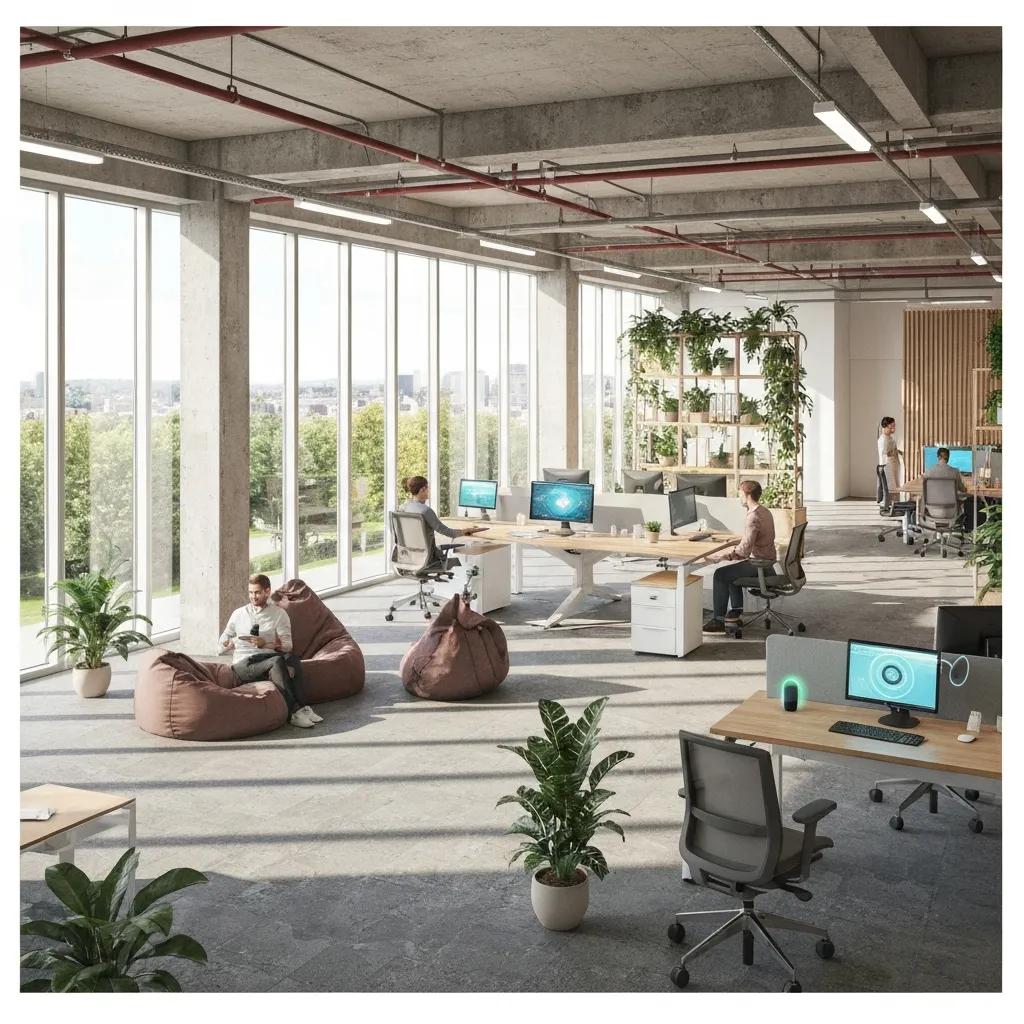
In 2025, office design blends wellbeing, sustainability and smart technology to create hybrid-ready workplaces that match employee expectations. Biophilic design and sustainable materials support health while cutting energy use; hybrid working needs flexible zoning and booking tools; and sensors and AV systems provide data to optimise space. These trends are particularly useful for Pendle organisations aiming for efficient, future-ready offices that attract and keep talent while lowering long-term costs.
These trends suggest practical steps — the sections that follow explain how biophilic strategies and smart tech can be applied locally.
Research shows that adding natural elements to the workplace can reduce stress and improve cognitive performance, including benefits for neurodivergent people returning to the office.
Biophilic Design for Neuro-Inclusive Workplaces and Occupational Health
This study examines how biophilic design affects occupational health and productivity, with particular attention to neurodivergent populations during the post‑pandemic return to work. With an estimated 15–20% of the global population considered neurodivergent, the research highlights the need for design strategies that accommodate attention‑related and sensory differences. Renewed focus on sustainability and staff wellbeing has renewed interest in biophilic approaches, which bring natural materials, plants and daylight into workplaces. The study reports that these interventions can reduce stress responses and support cognitive function for a broad range of users.
Neuroinclusive workplaces and biophilic design: Strategies for promoting occupational health and sustainability in smart cities, J Hutson, 2023
Biophilic design uses natural materials, planting and daylighting strategies to lower stress and improve cognitive performance; sustainable choices reduce running costs and demonstrate environmental responsibility. Simple moves — adding plants, using timber finishes and specifying LED lighting with daylight dimming — deliver visible wellbeing and energy benefits. Choosing low‑emission, durable materials supports long‑term indoor air quality and reduces maintenance. Balancing budget and upkeep helps you prioritise the changes that give the best return.
Biophilic strategies close the gap between modern urban living and human needs, helping people reconnect with nature during the working day.
Biophilic Design Strategies and Occupant Psychological Performance in Offices
This literature review explores predictors of biophilic strategies in office buildings and examines occupants’ perceived psychological performance. It finds three core predictors for biophilic design: direct experience of nature, indirect experience of nature, and the experience of space and place. Reported outcomes include improved productivity, more positive emotions, better cognitive function, reduced stress and higher overall occupant wellbeing. The review provides a conceptual framework to guide biophilic interventions in office environments.
The determinant factors of biophilic design strategies and occupants’ psychological performance in office building, AH Abdul Tharim, 2022
Hybrid work needs flexible furniture, clear zoning and integrated booking and AV systems so in‑office and remote colleagues collaborate smoothly. Smart tools — desk and room sensors, booking platforms and simple AV setups — give real data on occupancy and let you optimise space rather than guess. Improving video collaboration and meeting-room technology reduces friction and helps multi‑site teams work better together. Used together, these tools let managers refine layouts and policies based on observed behaviour, closing the loop between design and day‑to‑day operations.
Workspace planning and commercial interior design align layout, finishes and furniture to support workflows and express your brand while solving acoustic and lighting issues that affect productivity. Good planning uses zoning, circulation design and adjacency mapping to balance collaboration and focus, so people can move and interact without creating bottlenecks. Material and finish choices reinforce brand values and produce a coherent space that helps recruit and retain staff.
Effective workspace planning checklist:
These best practices create efficient, fit-for-purpose spaces and lead naturally to specific layout tactics.
Start by mapping tasks to locations with an adjacency matrix, then test options in CAD to validate sightlines and circulation. Add acoustic screening, a mix of seating types and adjustable desks to support varied tasks and reduce the cognitive load of switching modes. Lighting should focus on daylight harvesting and layered controls to minimise glare and support circadian comfort. Pilot small areas and iterate before a full roll‑out to limit costly rework.
Commercial interiors translate brand values into material choices, colour schemes and curated focal points that tell your story to visitors and staff. Thoughtful use of brand colours, textures and bespoke joinery in reception and shared spaces strengthens identity and builds pride. Involving staff in selecting elements — artwork or social-space layouts — improves adoption and often uncovers functional needs designers may miss. Design that supports operations deepens both external perception and internal culture.
Pendle businesses can choose ergonomic chairs, adjustable desks, collaborative furniture and bespoke joinery to meet operational needs. Pairing the right furniture with practical layouts amplifies comfort and productivity. Options range from sit‑stand desks that reduce sedentary time to modular systems that adapt as teams change. Supply, delivery and full installation services simplify projects, especially when a single supplier manages specification through to handover.
This product comparison helps prioritise purchases that deliver measurable outcomes and supports procurement planning that includes installation and aftercare.
The most effective ergonomic items are adjustable chairs with proper lumbar support, sit‑stand desks and monitor arms that promote neutral postures through the day. Choose furniture with easy user adjustments so more staff can personalise settings, reducing musculoskeletal risk and improving focus. Accessories such as footrests, keyboard trays and task lighting further reduce strain for heavy desk users. Durable, warrantied products with recognised ergonomic credentials give long‑term value and fewer replacements.
Lomas supplies bespoke furniture design, specification and a complete delivery and installation service across Lancashire and Pendle, coordinating lead times and on‑site assembly to maintain standards. We begin with bespoke design and specification, then schedule delivery windows that align with project phases and staged installation to limit downtime. Our installation teams complete quality checks, secure fittings and hand over with aftercare guidance and warranty paperwork. For clients wanting an end‑to‑end solution, this reduces logistics and provides one accountable contact throughout the project.
Small businesses can make the most of limited space with flexible furniture, vertical storage and multi‑use zones that support both focused work and occasional collaboration. Compact layouts work when circulation is considered, storage is integrated to free floor area and light finishes with good lighting broaden perceived space. Low‑cost pilots — testing a hot‑desking area or a modular meeting pod — let small teams validate changes before larger investment.
Applying these tactics increases usable space and supports hybrid working. The following sections explain compact-space strategies and how home‑office choices tie in.
Focus on multi‑function furniture, clear circulation and smart storage to keep comfort at higher desk densities. Clear sightlines and movable partitions let teams reconfigure quickly while preserving acoustic privacy where required. Bright lighting and reflective finishes help small spaces feel larger. Pilot changes in a single zone and refine before committing organisation-wide.
Supporting hybrid working means recommending reliable VC kit, durable home‑grade furniture and clear policies that set expectations for in‑office days and meeting etiquette. Essential tech includes a compact webcam/microphone and easy access to collaboration platforms to reduce friction between home and office participants. At home, a dedicated workspace with ergonomic seating and good lighting preserves boundaries and supports wellbeing. Aligning standards between home and office helps hybrid staff perform consistently and fairly.
When planning an office in Pendle consider your team’s daily tasks, the business type and the building itself. Prioritise ergonomic furniture, good daylight and lighting controls, and acoustic measures to reduce distractions. Also check local building regulations and community expectations so the design is practical and relevant. Involving employees early helps the space meet real needs and speeds adoption.
Thoughtful office design improves comfort, reduces stress and supports productive working — all of which raise job satisfaction. Spaces that offer natural light, ergonomic furniture and places for collaboration and quiet work make staff feel valued and more likely to stay. A workplace that reflects your company values also strengthens loyalty and helps keep talent.
Costs vary depending on space size, design complexity and materials chosen. Typical items include consultation, design fees, furniture procurement and installation. While initial investment can feel significant, many organisations see long‑term gains through higher productivity and lower absence. We recommend getting detailed quotes from a few providers to compare scope and value.
Small businesses benefit by making limited space work harder: efficient layouts, flexible furniture and integrated storage increase usable area and improve workflow. A well‑designed office also boosts client perception and staff morale. Even modest design changes can deliver a strong return by improving daily operations and supporting a clear brand identity.
Sustainability matters because it lowers running costs and supports staff health. Use energy‑efficient lighting, recycled or low‑emission materials and biophilic elements to reduce environmental impact and improve indoor air quality. Sustainable choices also strengthen your corporate responsibility message to clients and staff.
Integrate technology that supports day‑to‑day working: automated lighting and HVAC controls, simple AV for hybrid meetings, and booking systems for desks and rooms. Sensors and analytics help you understand how space is used and make evidence‑based changes. Designing with tech in mind keeps your workspace adaptable as needs change.