
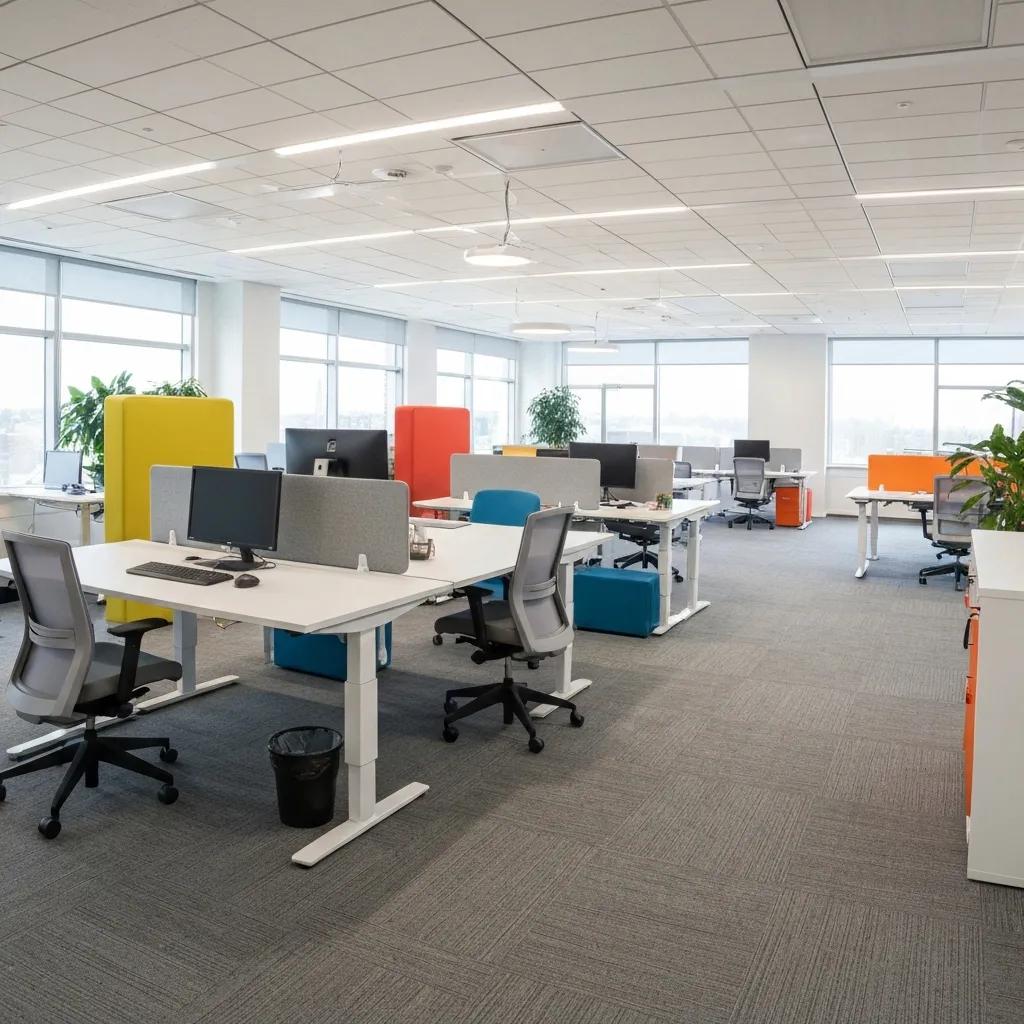
Office design services in Ribble Valley — practical, measurable workspace solutions
Office design in Ribble Valley is about more than new furniture — it’s about reshaping commercial spaces so they work harder for people and the business. This article explains how professional workspace design and office refurbishment in Ribble Valley bring together space planning, acoustics, lighting and ergonomics to produce tangible improvements for small and medium enterprises.
You’ll find an overview of a typical design and refurbishment workflow, practical space-planning ideas for hybrid working, clear guidance on choosing furniture, and the main cost factors to help you budget. Common problems such as cramped layouts, inconsistent branding or rising staff absence are solved by fit-outs that focus on ergonomics, circulation and technology integration.
The pages that follow cover the business case for professional design, step-by-step delivery, layout tactics, furniture selection, budgeting and local project examples tailored to Ribble Valley organisations.
We’re Lomas Office Furniture, based in Blackburn (BB1 3DL). We offer free, no‑obligation consultations and use CAD and space‑planning software to show Ribble Valley clients how proposals will look in their space. Our services include bespoke furniture, full refurbishments, project management and installation; you can request an initial survey by phone or email.
This short introduction points you to the local, turnkey route for projects — the rest of the article focuses on practical decision criteria to make the most of any supplier consultation and ensure the design delivers measurable workplace outcomes.
Why choose professional office design services in Ribble Valley?
Hiring a professional designer is an investment that aligns your physical workspace with business goals: better productivity, improved wellbeing and a stronger brand impression. A good design process studies workflows, applies space‑planning and ergonomic principles, and factors in acoustics and lighting to cut distractions and fatigue.
Local experience matters — Ribble Valley projects benefit from suppliers who understand regional regulations, supply chains and contractor availability, which helps reduce disruption during refurbishments. Experienced designers cut rework, producing outcomes such as higher space utilisation and improved staff satisfaction that you can measure. Below we set out the core benefits in practical terms to help justify the investment.
What are the key benefits of commercial office design for Ribble Valley businesses?
Professional office design delivers measurable business gains by making space support core activities, lowering absenteeism and reinforcing brand identity through consistent finishes and layouts. Thoughtful layouts increase usable workspace and can boost collaboration while reducing wasted circulation — directly affecting productivity.
A well‑designed reception and meeting area also improves client impressions, helping win work and demonstrating competence. These benefits matter most to growing local firms that need adaptable spaces to scale without costly rework. Knowing these outcomes helps decision‑makers prioritise design elements that give the best return on investment.
Good office design improves productivity and employee wellbeing by combining ergonomic furniture, clear zoning, acoustic control and well‑considered lighting to reduce cognitive load and physical strain. Ergonomic chairs and adjustable desks cut musculoskeletal complaints and help people stay comfortable and focused for longer.
Zoning — separating quiet focus areas from collaboration hubs — reduces interruptions and helps teams switch modes efficiently. Better acoustics and daylight distribution reduce stress and lift mood, which in turn lowers turnover risk and supports retention. These are the practical mechanisms behind the human and financial benefits of targeted interventions.
Professional design offers direct workplace benefits:
- Higher productivity through improved workflows and fewer interruptions.
- Better employee wellbeing using ergonomics and improved environmental conditions.
- Stronger brand presence in client‑facing areas and reception.
- Lower lifetime costs by optimising space and reducing future rework.
These outcomes help prioritise where to put budget during a refurbishment. The next section explains the end‑to‑end process that delivers those results.
What does the office design and refurbishment process in Ribble Valley involve?
A clear, managed refurbishment process takes a project from initial survey to handover with set deliverables and timelines, reducing uncertainty and on‑site disruption. Effective programmes start with a free consultation and site survey, move through CAD‑led design and approvals, then into procurement, installation and aftercare — all coordinated by a single project manager. CAD visualisations help stakeholders see spatial changes and furniture choices before work starts, speeding decisions and minimising costly on‑site changes. Timelines vary by scope, but careful scheduling, phased working and local supply chains keep Ribble Valley projects running efficiently. The numbered steps and table below set out key milestones, expected outputs and responsibilities at each phase.
The typical office refurbishment process looks like this:
- Initial survey and free consultation to confirm objectives and constraints.
- CAD‑led space planning and design options for client review and revision.
- Procurement of furniture, finishes and specialist trades based on approved designs.
- Coordinated installation, snagging and formal handover with aftercare support.
This staged approach keeps clients informed and reduces operational downtime by aligning deliveries and trades in a sensible sequence.
This phase table shows the deliverables for each stage and helps set realistic expectations about timing and client involvement. Clear milestones make it easier to compare quotes from different providers.
How does Lomas Office Furniture’s consultation and CAD design service work?
Our consultation starts with a free, no‑obligation survey to record measurements, current workflows and business goals, producing a concise brief. We use CAD and space‑planning software to deliver floorplans and 3D visualisations that turn the brief into tangible layouts, so you can review circulation, desk arrangements and meeting spaces before committing.
The approval process allows for revisions up to sign‑off, which streamlines procurement and reduces surprises during installation. Turnaround between survey and final designs depends on complexity and is explained at the first meeting, so timelines and decision points are clear from the outset. Knowing this process helps stakeholders prepare for approvals and procurement schedules.
What are the stages of office refurbishment and installation projects in Ribble Valley?
Refurbishment typically follows pre‑construction planning, mobilisation, works delivery and post‑completion support — each stage managed to limit disruption and keep the site safe. Pre‑construction covers detailed design, specifications and technical checks; mobilisation organises deliveries and temporary protections; works delivery sequences trades logically; and post‑completion deals with snagging and warranties.
Common trades include flooring installers, electricians, decorators and furniture fitters, all coordinated by the project manager to reduce overlaps and delays. Regular progress updates and staged access help businesses remain operational while works proceed. These stages build a dependable framework for meeting time and budget expectations.
How can office space planning optimise your Ribble Valley workspace?
Space planning adapts layout strategies to local business needs — balancing collaboration, focus and flexibility so the physical environment supports how work actually happens. We analyse occupancy patterns and work modes to zone areas for concentrated work, collaborative activity and informal interaction, using modular furniture and moveable partitions to preserve adaptability.
Circulation, accessibility and sightlines are planned to reduce wasted space and meet accessibility expectations, while technology integration supports hybrid working with meeting pods and hot‑desk booking systems. The sections below outline modern layout options and show how ergonomic design delivers measurable health and performance gains.
What are the best modern office layout ideas for businesses in Ribble Valley?
Modern layouts range from open‑plan with defined hubs to hub‑and‑spoke and modular cell systems — each suits different company sizes and cultures. Open‑plan with breakout zones works well for small teams that need constant collaboration, while hub‑and‑spoke supports hybrid models by combining a central collaborative hub with distributed focus spaces.
Enclosed focus rooms and phone booths provide privacy for calls and concentrated work without sacrificing openness, and modular furniture makes reconfiguration simple as teams change. The right layout depends on work patterns, client‑facing needs and growth plans; a well‑chosen option reduces friction between teamwork and individual productivity.
Layout ideas and quick benefits:
- Open‑plan with defined hubs: boosts collaboration and gives visual team alignment.
- Hub‑and‑spoke model: supports hybrid attendance while keeping core collaborative areas central.
- Modular flexible layout: allows quick reconfiguration as team sizes or needs change.
These layout choices feed directly into furniture selection and ergonomic strategy, addressed in the next section.
How does ergonomic workspace design benefit employee health and productivity?
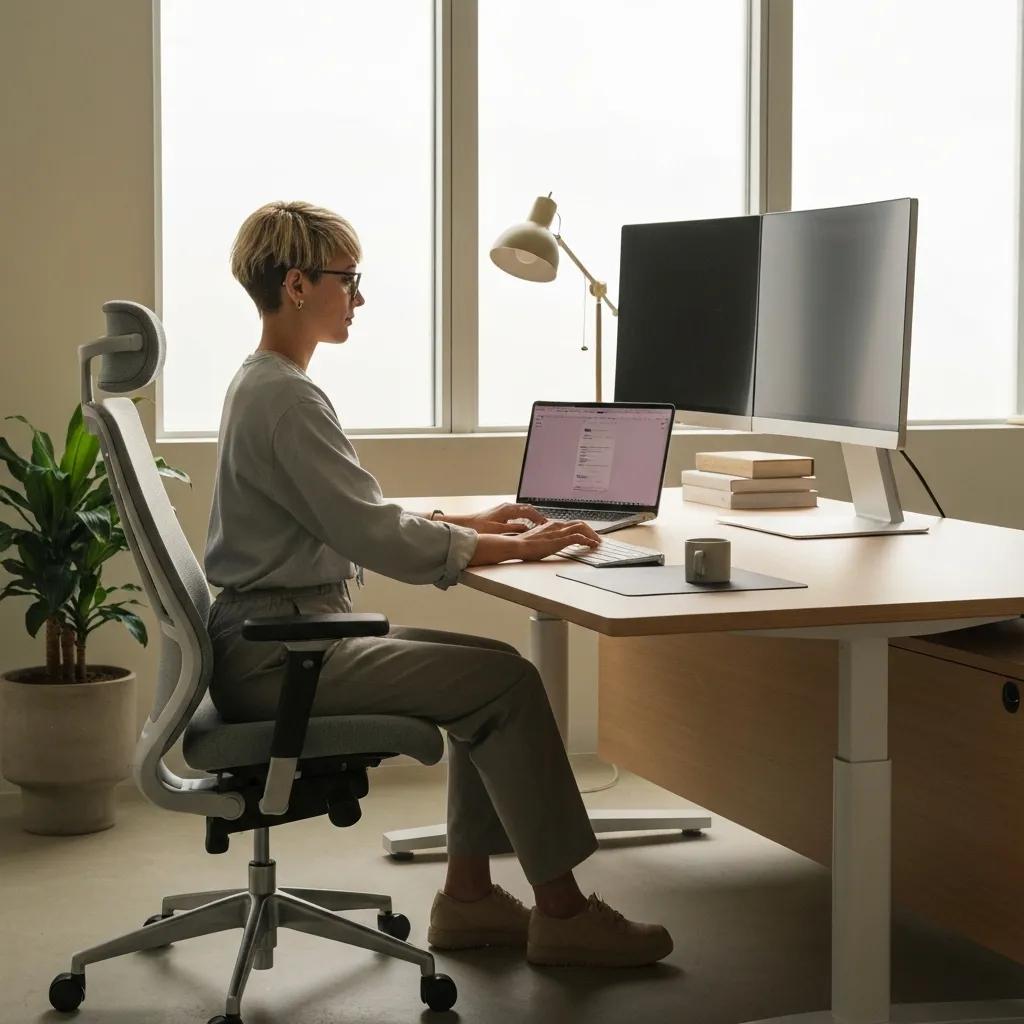
Ergonomic design cuts musculoskeletal strain and cognitive fatigue by matching furniture, screen heights and task lighting to user needs, improving comfort and sustained focus. Adjustable chairs with good lumbar support, height‑adjustable desks and correct monitor positioning reduce repetitive strain and let people change posture through the day, which lowers absence and raises engagement.
Practical training and simple guidance improve adoption; long‑term gains include fewer sick days and better retention. When ergonomics is part of space planning, layout and furniture choices reinforce healthy working habits and measurable performance improvements.
What office furniture and supplies are essential for Ribble Valley businesses?
Essential office furniture and supplies for Ribble Valley organisations focus on ergonomics, durability and fit‑for‑purpose design to support daily operations and staff welfare. Key categories include ergonomic task chairs, height‑adjustable desks, collaborative meeting furniture, storage solutions and practical stationery to keep teams productive.
Bespoke furniture can solve awkward layouts or strengthen brand alignment, while off‑the‑shelf items speed procurement; the right mix depends on budget, lead times and maintenance expectations. The table below compares common furniture types, their ergonomic features and the business benefits to help with selection.
This comparison shows how specific furniture choices translate into practical workplace advantages and why investing in quality often reduces long‑term replacement costs.
Why choose bespoke office furniture for commercial use in Ribble Valley?
Bespoke furniture gives a tailored fit, consistent finishes and optimised storage that maximise usable area and reflect your brand in client‑facing spaces. Custom pieces solve awkward geometries and let you specify durable materials for heavy daily use, often extending lifespan compared with standard items.
Bespoke solutions usually have longer lead times and higher upfront cost, but they can offer better long‑term value by reducing wasted space and supporting a coherent visual identity. For businesses with irregular floorplates or specific branding needs, bespoke options often hit the best balance of form and function within a managed project schedule.
How to select office chairs and desks that enhance employee comfort and productivity?
Start with ergonomic criteria: adjustability, lumbar support, seat depth and desk height range are the primary considerations that match users’ bodies and tasks. Use height‑adjustable desks where tasks vary or to encourage sit‑stand working; choose chairs with multi‑directional adjustments and commercial warranties.
Trial options and check maintenance and spare‑part policies to reduce risk, and pair chairs with monitor arms and suitable lighting for a complete ergonomic set‑up. Include measurements of typical users and a short trial period so adjustments can be refined before a full rollout.
Furniture selection checklist:
- Confirm adjustability features and warranty terms for each product.
- Match desk type to work patterns (fixed, sit‑stand, hot‑desk).
- Include cable management and durability requirements in specifications.
This checklist simplifies procurement decisions and helps your team prepare for installation and ongoing maintenance.
How much does office refurbishment cost in Ribble Valley and what influences pricing?
Refurbishment costs in Ribble Valley vary with scope, specification level, mechanical and electrical work, flooring and ceiling choices, bespoke furniture and delivery timescales. Small cosmetic refreshes (paint and minor reconfiguration) sit at the lower end; full fit‑outs with new M&E, bespoke joinery and acoustic treatments sit higher.
Main cost drivers are finish quality, extent of structural or technical work, furniture specification and urgency of delivery, which can require premium scheduling. The table below highlights common elements, their cost drivers and typical impact on the budget, followed by practical budgeting tips and phasing strategies to control spend.
This table clarifies which elements most influence total cost and helps you prioritise budget allocation to areas that deliver the highest value.
What factors affect the cost of commercial office refurbishment in Ribble Valley?
Key cost factors include project scope (cosmetic vs full fit‑out), selected finishes, extent of M&E works, need for specialist trades and any structural changes or permissions required. Timelines and contractor availability also affect price since compressed programmes may need weekend or out‑of‑hours work. Choices such as acoustic treatments, bespoke joinery or high‑performance glazing add value but increase cost. Understanding the largest cost drivers lets businesses adjust scope or phase works to match budgets and strategic priorities.
How can businesses budget effectively for office refurbishment projects?
Budgeting effectively means staging the work: define must‑haves, allocate contingency (typically 10–20%), and consider phasing to spread costs while delivering immediate benefits first. Get detailed quotes tied to agreed designs, ask for provisional sums where items are uncertain, and compare lifecycle costs rather than only capital cost. Phased delivery — for example, addressing core workstations first, then meeting areas — lets you spread expenditure and refine later stages based on lessons learned. These strategies reduce financial risk and help align project outcomes with business goals.
Budgeting tips:
- Include a contingency of 10–20% for unforeseen costs.
- Prioritise critical work areas and phase the project strategically.
- Request itemised quotes and compare lifecycle implications.
Applying these principles keeps refurbishment projects realistic and better aligned with operational needs.
What are successful office design projects and client experiences in Ribble Valley?
Case examples show how design choices translate into measurable improvements, though local providers don’t always publish quantitative outcomes. Good case summaries outline the initial problem, the interventions (layout, furniture, acoustics) and the results — for example better space utilisation or lower absenteeism.
Ribble Valley businesses commonly benefit from tailored solutions that combine CAD‑led design, managed procurement and coordinated installation, producing quicker completion and less disruption. The sections below outline illustrative highlights and summarise common client feedback themes without specific endorsements.
Which Ribble Valley office design projects showcase Lomas Office Furniture’s expertise?
Recent local projects typically involve small‑to‑medium refurbishments where space optimisation and ergonomic upgrades delivered clear operational benefits. Typical work includes reconfiguring open‑plan areas into zoned work and collaboration hubs, creating bespoke reception joinery to reflect client branding, and fitting height‑adjustable desks with ergonomic chairs to reduce staff discomfort.
Reported outcomes include higher workstation density without losing comfort and smoother meeting flows in client areas. These highlights show how integrated design, furniture supply and project management create functional, coherent workspaces that support business needs.
What do Ribble Valley clients say about their office refurbishment and design experience?
Client feedback commonly highlights clear communication from survey to handover, the usefulness of CAD visualisations for decision‑making, and reduced on‑site disruption thanks to coordinated project management. Businesses appreciate having a single supplier manage furniture procurement and installation, which simplifies logistics and accountability.
While direct quotes aren’t reproduced here, recurring points of satisfaction are timely updates, predictable scheduling and durable workmanship. If you’re ready to explore a redesign, request our free, no‑obligation consultation by phone or email to get an accurate quote and CAD visuals for your workspace.
Key client experience takeaways:
- Clear project communication speeds decisions and builds confidence.
- CAD visualisations let stakeholders approve layouts with certainty.
- Managed installation reduces downtime and simplifies logistics.
These themes explain why integrated, locally managed services often produce better outcomes for Ribble Valley organisations and provide a clear starting point for your project.
Frequently Asked Questions
What are the advantages of using CAD in office design?
CAD (Computer‑Aided Design) offers precise visualisation of layouts and furniture arrangements, allowing designers to create detailed 2D and 3D models so clients can see spatial relationships and workflow before any physical changes are made. CAD speeds revisions and makes it easy to incorporate client feedback, reducing the risk of costly on‑site changes and improving overall project confidence and satisfaction.
How can office design impact employee retention?
Office design affects retention by creating a comfortable, engaging workplace. Ergonomic furniture, good lighting and well‑planned layouts reduce physical strain and support productivity. Thoughtful spaces that promote collaboration and reflect company culture help employees feel connected to the organisation, increasing job satisfaction and reducing turnover. Investing in design is therefore a practical way to keep talent.
What role does lighting play in office design?
Lighting is a fundamental element that influences productivity and wellbeing. Natural light boosts mood and energy, while carefully placed artificial lighting reduces eye strain and fatigue. Effective lighting design matches the task at hand, minimises glare and allows some individual control where possible. Overall, considered lighting makes the workspace more comfortable and productive.
How can businesses ensure their office design aligns with their brand identity?
To align design with brand identity, use brand colours, logos and values in finishes, furniture and signage. Choose materials and layouts that reflect the company’s culture — whether collaborative or focused — and involve employees in the process so the space resonates with the team. The result should feel authentic and support your brand story in client‑facing and internal areas alike.
What are the common challenges faced during office refurbishment?
Common challenges include managing disruption to daily operations, coordinating multiple contractors and sticking to timelines and budgets. Unexpected structural issues can cause delays and extra costs, and ensuring compliance with local regulations may add complexity. Strong communication and proactive project management, with contingency plans in place, help mitigate these risks and deliver a successful refurbishment.
How does office design influence collaboration among employees?
Design shapes collaboration by creating spaces that encourage interaction and teamwork. Open layouts with dedicated collaboration zones promote spontaneous discussion, while flexible furniture allows teams to adapt spaces for different tasks. Integrating conferencing technology in meeting areas helps remote and on‑site staff work together smoothly. Prioritising collaboration in design supports innovation and a stronger team culture.
What should businesses consider when selecting office furniture?
When choosing furniture, prioritise ergonomics, durability and functionality. Look for adjustable chairs and desks, robust warranties and products that suit your day‑to‑day needs. Furniture should also be adaptable to different work styles and match your brand’s aesthetic. Consider layout and flow to ensure furniture supports productivity and collaboration across the workplace.