
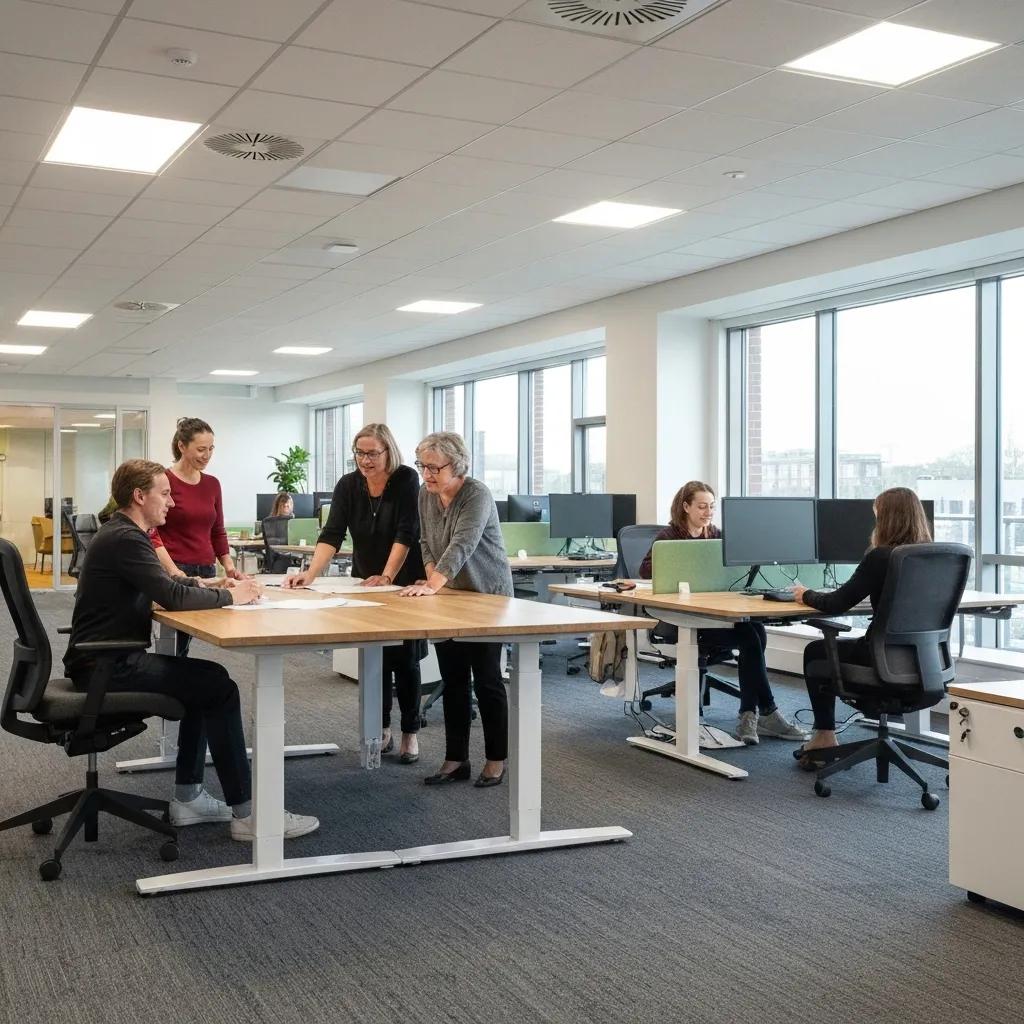
Office design services in Darwen — practical, productive workspaces that reflect your brand
A well-designed office in Darwen blends smart space planning, ergonomic furniture and a clear visual identity to lift productivity, support staff wellbeing and present a professional image to clients. This guide explains what office design in Darwen covers, why it matters for local businesses and how a practical brief-to-install approach delivers measurable results. Many SMEs work around cramped layouts, poorly arranged meeting zones and uncomfortable furniture; the right design turns those limits into flexible, hybrid-ready space while cutting waste and ongoing costs.
Below we outline the main benefits of professional design, the typical end-to-end process local providers use, the services available in Darwen, ergonomic furniture guidance for hybrid teams, local project examples and short answers to common questions. We also reference everyday tools such as CAD and 3D visualisations, space-optimisation techniques and sustainable choices relevant to Darwen and wider Lancashire businesses. Read on to see how workspace design can change daily operations, improve client perception and reduce long-term costs.
Key benefits of professional office design in Darwen
Professional office design aligns space planning, ergonomics and brand expression to real business outcomes. Better layouts improve circulation, lower distractions and make the most of your floor area — all of which support higher productivity. Thoughtful zoning creates clear areas for focused work, collaboration and client meetings, while ergonomic choices reduce fatigue and absence; together these changes often produce measurable gains and lower staff turnover. The list below summarises the primary benefits with short notes on why they matter.
Office design delivers these core outcomes for Darwen employers:
- Increased productivity: Better workstation ergonomics and clearer zoning reduce cognitive friction and can lead to measurable productivity improvements.
- Improved employee well‑being: Ergonomic seating, adjustable desks and daylight strategies reduce discomfort and support regular attendance.
- Stronger brand impression: Well-designed receptions and meeting areas build client trust and project professionalism.
- Cost efficiency: Right-sized layouts and durable furniture cut real estate and replacement costs over time.
These benefits typically come from a coordinated design process that links clear specifications to measurable goals — we explain that process next so you can see how outcomes are planned and validated.
Intro to comparative outcomes table: the table below links benefit types to common evidence and realistic outcomes for local businesses.
Evidence shows a well-designed workplace affects productivity by addressing both physical conditions and user behaviour.
Assessing the impact of the office environment on productivity
This paper develops a framework to assess office productivity that combines physical and behavioural elements of the workplace. It argues that considering both dimensions gives better insight into how environments influence performance and interactions.
An evaluation of the impact of the office environment on productivity, 2008
How office design improves productivity and employee well‑being
Office design supports concentration and comfort by tackling physical and environmental factors: ergonomics, acoustic zoning and daylighting work together to cut fatigue and interruptions. Adjustable chairs and desks help posture and reduce musculoskeletal strain, lowering short‑term discomfort and long‑term absence. Zoning keeps high‑traffic collaboration areas separate from quiet focus spaces so teams can switch tasks without disrupting each other. Add purposeful lighting and biophilic touches and you raise morale and cognitive performance. In local practice, small layout changes — moving meeting rooms, creating touchdown points and upgrading seating — often bring noticeable improvements in daily workflow and staff satisfaction, and set the stage for measurable productivity gains.
Why brand identity and cost efficiency matter in office design
Your workspace speaks for your business. Materials, colour and spatial organisation combine to create a coherent brand experience — first impressions in reception and meeting spaces influence client relationships. Cost efficiency is equally important: optimised layouts let you do more within the same footprint and specifying durable finishes reduces replacement cycles. Choosing materials that reflect your brand while meeting durability standards lowers total cost of ownership and keeps client perception consistent over time. The next section shows the practical steps that turn these priorities into tangible deliverables, from survey to install.
How our office design process works at Lomas Office Furniture
At Lomas Office Furniture — based in Blackburn — we provide office design services for businesses in Darwen. Our process starts with capturing requirements, then moves through space planning and CAD/3D visualisation, and finishes with procurement and professional installation so the design performs as intended. This staged approach reduces risk by turning concepts into validated plans before any physical work begins, which limits surprises and helps clients compare options with confidence.
- Initial consultation and site survey: We capture needs, constraints and objectives.
- Space planning and concept design: We present layout options and functional zoning.
- CAD drawings and 3D visualisations: We validate spatial relationships and finishes.
- Specification and procurement: We select ergonomic furniture and materials.
- Installation and handover: We complete the fit‑out and carry out post‑project checks.
Each stage produces tangible deliverables — site survey reports, scaled plans and rendered visuals — that make decision‑making clearer and speed delivery. The table below outlines phases, key activities and expected outputs so you know what to expect.
We operate as a one‑stop solution: consultation, CAD/3D visualisations and professional installation are coordinated under a single point of contact. For Darwen clients this reduces coordination overhead and helps projects meet cost and schedule expectations. (lomasoffice.co.uk) We also offer free, no‑obligation consultations to get you started.
What happens during the initial consultation and space planning?
The initial consultation and space planning phase records functional requirements and site measurements, captures stakeholder needs and explores layout options that meet business goals. Typical activities include a measured survey, interviews with key users to understand work patterns and an assessment of services such as power, AV and natural light. Deliverables usually include a site survey report, an initial space plan and recommendations on zoning, capacity and furniture types. Clear objectives established here — for example increasing desk utilisation or creating collaborative hubs — guide CAD modelling and specification work to keep the project aligned with business outcomes.
How we use CAD and 3D visualisations in Darwen projects
CAD drawings and 3D visualisations turn design intent into accurate, reviewable files that stakeholders can check for layout, circulation and finishes. This visual validation reduces on‑site changes and builds client confidence at sign‑off. CAD ensures accurate measurements and helps demonstrate compliance with building regulations, while 3D renders show material choices, lighting and furniture relationships so non‑technical stakeholders can picture the final space. These deliverables also support clash detection for services and precise procurement by confirming exact furniture sizes and positions. By resolving issues digitally, Darwen projects typically move to installation with fewer surprises and clearer schedules.
Which office design services are available in Darwen?
Darwen businesses can access a full range of office design services — from advisory and space planning to complete fit‑outs and furniture supply. Local providers often offer integrated packages that combine design, procurement and installation. Below is a short introduction to core service categories and a list to help you identify what you need based on outcome and timeline.
Services available locally include:
- Office design and space planning: Concept development, CAD and zoning to improve workflow.
- Office refurbishment and fit‑out: Structural and finishes work with trades coordination.
- Office furniture supply: Ergonomic chairs, sit‑stand desks and storage solutions.
- Project management and installation: On‑site coordination of trades and professional installation.
These services are usually packaged into turnkey offers — you get one proposal and coordinated delivery to minimise disruption. The comparison table below shows what each core service includes and the typical timeline or outcome for Darwen projects.
Lomas Office Furniture provides design, refurbishment, fit‑out, furniture supply and professional installation as part of our local service range, allowing a single supplier to manage your project from concept to completion. These packaged options help Darwen organisations reduce procurement complexity while accessing ergonomic, hybrid‑ready solutions. (lomasoffice.co.uk)
What does an office refurbishment in Darwen include?
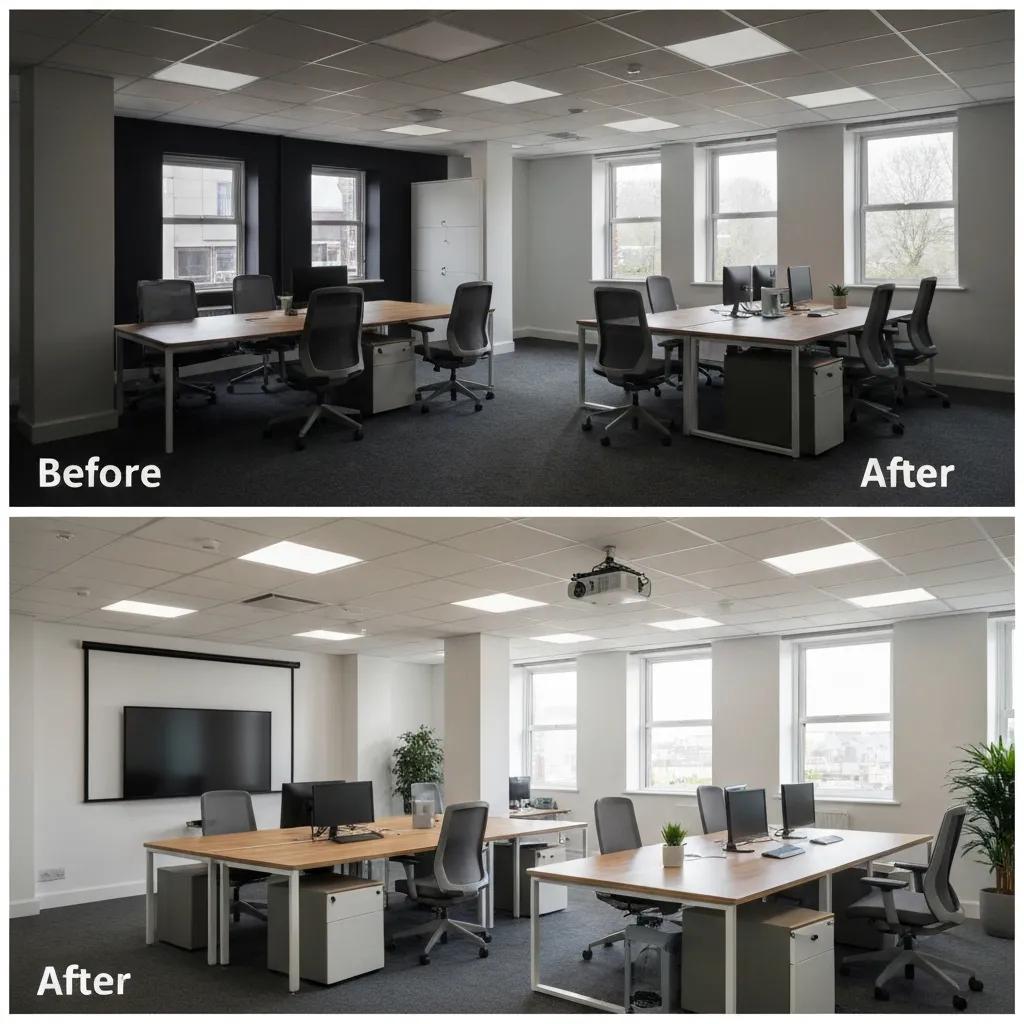
An office refurbishment in Darwen typically covers internal finishes, lighting upgrades, electrical and data work, partitioning and furniture replacement. Effective project management is essential to coordinate trades and minimise disruption to the business. The process starts with a detailed survey to identify structural constraints and client priorities, then follows a phased plan so operations can continue where needed. Timelines vary with scale — small refurbishments can finish in a few weeks while larger fit‑outs take longer — and include inspections, service testing and a formal handover. Clear milestones and proactive communication reduce client risk and keep the project on budget and schedule.
How a fit‑out transforms commercial space in Darwen
A fit‑out converts a shell or dated office into a compliant, branded workspace by integrating lighting, AV, power, flooring and furniture to create a fully operational environment. The work addresses practical needs — efficient circulation and adequate meeting capacity — and regulatory requirements such as fire safety and accessibility, so the space is safe and usable from day one. Typical before/after impacts include better workflow, fit‑for‑purpose meeting areas and a refreshed appearance that helps recruitment and client visits. Turnkey fit‑outs provide a single timeline and single point of responsibility, removing the complexity of dealing with multiple suppliers separately.
How ergonomic office furniture can enhance your Darwen workspace
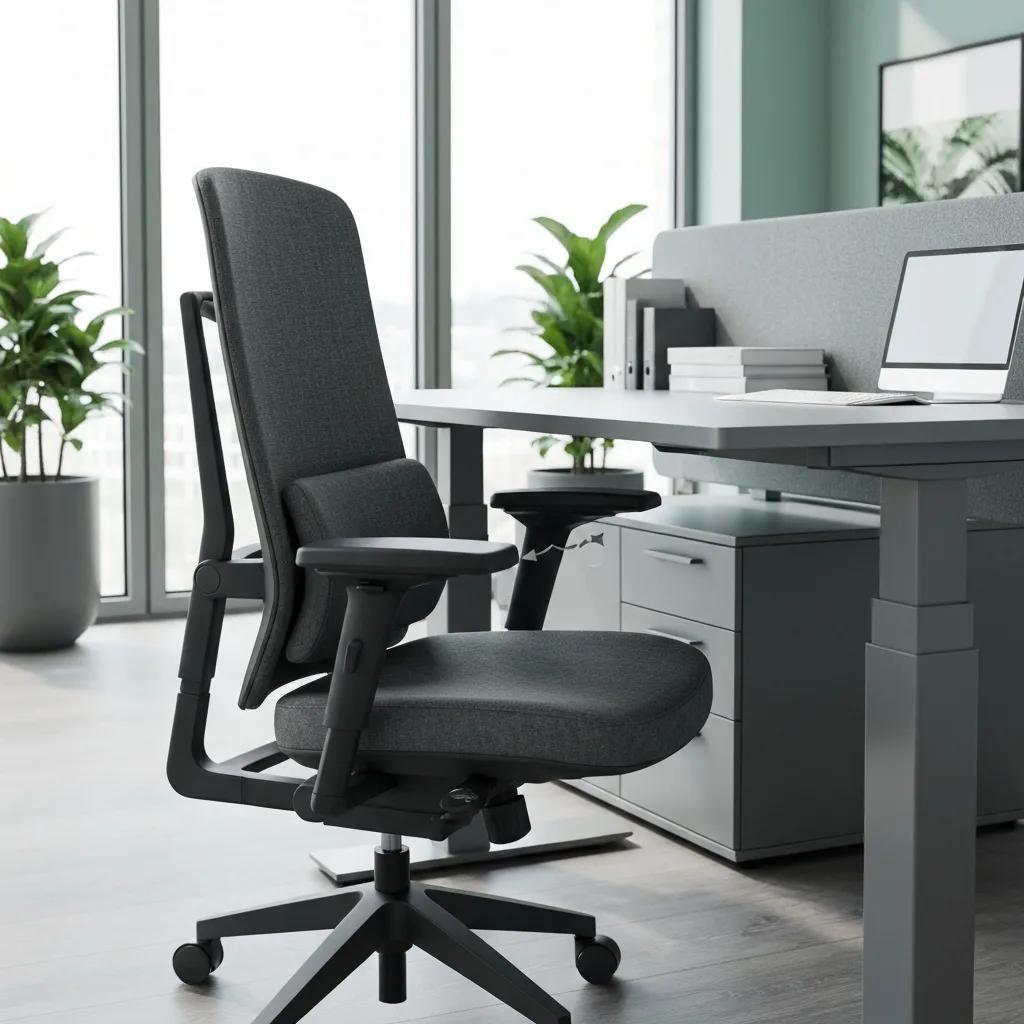
Ergonomic furniture improves health and productivity by giving adjustable support that reduces physical strain and lets people change posture through the day. The result is better circulation, less muscle tension and sustained focus. Key pieces — chairs with lumbar support, height‑adjustable desks and flexible meeting furniture — let teams adapt workstations to individual needs and hybrid routines. Choosing ergonomic options also shows a commitment to staff wellbeing, which helps retention and cuts indirect costs linked to discomfort and sick leave. The next section outlines specific health benefits and practical furniture recommendations for Darwen offices.
As work evolves, adaptable furniture that supports collaboration and social interaction becomes increasingly important.
Designing furniture for versatile collaborative workspaces
The COVID‑19 pandemic accelerated a shift to hybrid, flexible work models and increased hygiene considerations. As a result, workplaces are becoming places for collaboration and social interaction. Furniture must therefore be versatile and modular to support these changing patterns and collective wellbeing.
Designing furniture for versatile spaces of collaborative work. Covid‑19 accelerating the change, F Pombo, 2022
Benefits of ergonomic furniture for employee health
Ergonomic furniture lowers the risk of musculoskeletal problems by supporting neutral posture and encouraging movement, which reduces daily discomfort and the chance of longer‑term conditions. Adjustable chairs with lumbar and arm support ease spinal strain, while sit‑stand desks encourage posture variation that helps circulation and alertness. These improvements generally lead to fewer aches, better concentration and lower absenteeism — contributing to a healthier workforce. When choosing products, look for a wide adjustability range, robust build quality and easy maintenance to secure long‑term health benefits and sensible total cost of ownership.
Modern layouts that support hybrid and collaborative working
Contemporary layouts for hybrid teams use zoning — quiet focus areas, collaboration hubs and touchdown spaces — to match activities with the right environment and technology. Activity‑based working provides spaces for deep focus, informal collaboration and formal meetings, while hot‑desking and lockers support time‑split teams. Technology — flexible AV and simple booking systems — keeps hybrid meetings running smoothly and connects remote and on‑site participants. Implementing these typologies requires careful planning and furniture choices that prioritise mobility and quick reconfiguration.
Examples of successful office design projects in Darwen
Local project examples show how targeted design interventions solve constraints such as limited footprints, awkward circulation and dated finishes to produce measurable improvements in space use and staff experience. Case stories typically follow a problem → solution → outcome structure, demonstrating how modest investment and better planning deliver outsized benefits. Below we outline typical challenges and the design responses that produced quantifiable results for Darwen clients, followed by a summary of measurable outcomes often reported after completion.
How Lomas addressed common challenges in Darwen refurbishments
On constrained Darwen sites we focus on maximising usable workspace through tailored layouts, compact bespoke solutions and close coordination with trades to meet tight schedules. Common tactics include reconfiguring partitions to improve circulation, adding compact storage to free desk space and specifying modular furniture that grows with the team. Professional installation reduces downtime and ensures the design intent is realised on site. These targeted changes often allow clients to maintain operations during upgrades and finish with clearer, more usable work environments.
Measured results clients have reported after redesigns
Clients often report tangible improvements such as better space utilisation, less time spent searching for documents or colleagues and higher staff satisfaction after a design project. Typical tracked gains include improved workstation utilisation, fewer meeting overruns thanks to better room layouts and reduced reports of discomfort following ergonomic upgrades. Sharing these metrics helps business owners evaluate ROI and plan phased investments. The next section answers the most common questions local businesses ask when considering design or refurbishment.
Common questions about office design and refurbishment in Darwen
This FAQ section gives concise, practical answers to questions local businesses ask most — covering benefits, costs and scope — to help busy managers decide next steps and when to request a tailored consultation.
What are the benefits of professional office design in Darwen?
Professional office design in Darwen boosts productivity, improves staff wellbeing and strengthens client impressions by combining space planning, ergonomics and brand cues into measurable outcomes. Design changes reduce distractions and support hybrid working through zoning and flexible furniture, which can lower turnover and operational inefficiency. These benefits show up as faster workflows, fewer sick days and stronger impressions during face‑to‑face meetings. The next step is to speak to a local specialist to translate these benefits into a project that matches your business goals.
How much does an office fit‑out cost in Darwen?
Fit‑out costs in Darwen vary with scope, finishes and services required. Small refurbishments sit in a lower budget band, while full turnkey fit‑outs with electrical, AV and bespoke joinery sit higher. Main cost drivers are structural work, finish quality, furniture specification and project timescale. Because of these variables, the most accurate estimate comes from a tailored quote after a free consultation and site survey. Working with a one‑stop provider that handles design, supply and installation can simplify budgeting and reduce coordination overhead.
What is involved in an office refurbishment project?
An office refurbishment usually follows a clear sequence: consultation and survey, design and approvals, procurement of materials and furniture, coordinated installation and trade work, then testing and formal handover. Each stage has distinct deliverables — CAD plans, schedules and handover documentation — that provide transparency and control. Phased staging reduces business disruption by allowing targeted shutdowns when necessary. For an accurate timetable and cost plan, arrange a no‑obligation consultation so a specialist can assess your specific needs.
Final call to action: If your Darwen business is ready to explore a tailored office design or refurbishment, Lomas Office Furniture offers a free, no‑obligation consultation and can manage projects from survey and CAD/3D visualisations through to professional installation — contact details are below for direct enquiries.
- Lomas Office Furniture, Unit 12, Bridgewater Business Park, Blackburn BB1 3DL
- Email: sales@lomasoffice.co.uk
- Phone: 01254 690 600
Frequently asked questions
What factors should I consider when choosing office furniture for my workspace?
When choosing office furniture, focus on ergonomics, durability and adaptability. Ergonomic furniture supports posture and reduces strain; durability ensures items withstand daily use; adaptability allows quick reconfiguration as your team or working patterns change. Also consider aesthetics and how the furniture reflects your brand — appearance affects client perception and staff morale.
How can I ensure my office design supports hybrid working?
Support hybrid working with flexible layouts that include quiet focus zones, collaboration hubs and touchdown spaces. Use modular furniture that reconfigures easily for different team sizes and activities. Integrate reliable AV, simple room‑booking tools and good connectivity so hybrid meetings run smoothly. Review the layout regularly and adjust based on staff feedback to keep the space working as needs change.
What role does lighting play in office design?
Lighting strongly affects productivity, mood and wellbeing. Natural light is ideal — it boosts alertness and reduces eye strain. Use adjustable artificial lighting to suit different tasks and combine ambient, task and accent lighting for a balanced environment that supports focused work and collaboration. Thoughtful lighting also improves the look and feel of the workspace.
How can I measure the success of my office design project?
Measure success with employee satisfaction surveys, productivity metrics and space utilisation rates. Carry out post‑occupancy evaluations to collect feedback and spot improvement areas. Track absenteeism and turnover, and gather client feedback about the workspace. Set clear goals at the project start so you can assess whether the design meets your business objectives.
What are the latest trends in office design?
Key trends include biophilic design that brings natural elements into the workspace, flexible layouts that support varied ways of working, and a growing emphasis on sustainability — eco‑friendly materials and energy efficiency. Technology integration and smart office solutions also continue to rise, helping connectivity and collaboration while supporting both individual and team needs.
How can I involve employees in the office design process?
Involve employees early to improve outcomes and satisfaction. Run surveys or focus groups to collect needs and preferences, invite staff to brainstorms or design workshops and keep people updated throughout the project. Giving employees a voice fosters a sense of ownership and helps ensure the final design supports real working practices.