How to Choose Office Furniture

How to Choose Office Furniture

The Complete Buying Checklist for Your Business

The Lomas Office Principle

The best office furniture isn’t the furniture that looks the most impressive. It’s the furniture that quietly helps your business perform better every single day.

Choosing office furniture is one of those decisions that seems straightforward until you actually have to make it.

A quick search online presents thousands of desks, hundreds of office chairs and countless furniture ranges, all claiming to be the perfect solution. Before long, the decision becomes about colours, finishes and prices rather than what really matters.

The truth is that successful businesses rarely start with furniture.

They start with the workplace.

Office furniture should support the way your business operates, the way your employees work and the direction your company is heading. Get those decisions right and the furniture becomes an investment that delivers value for many years. Get them wrong and even the most expensive furniture can leave you with a workplace that still doesn’t function as it should.

This guide isn’t about recommending one desk over another.

It’s about helping you ask the right questions before you invest.
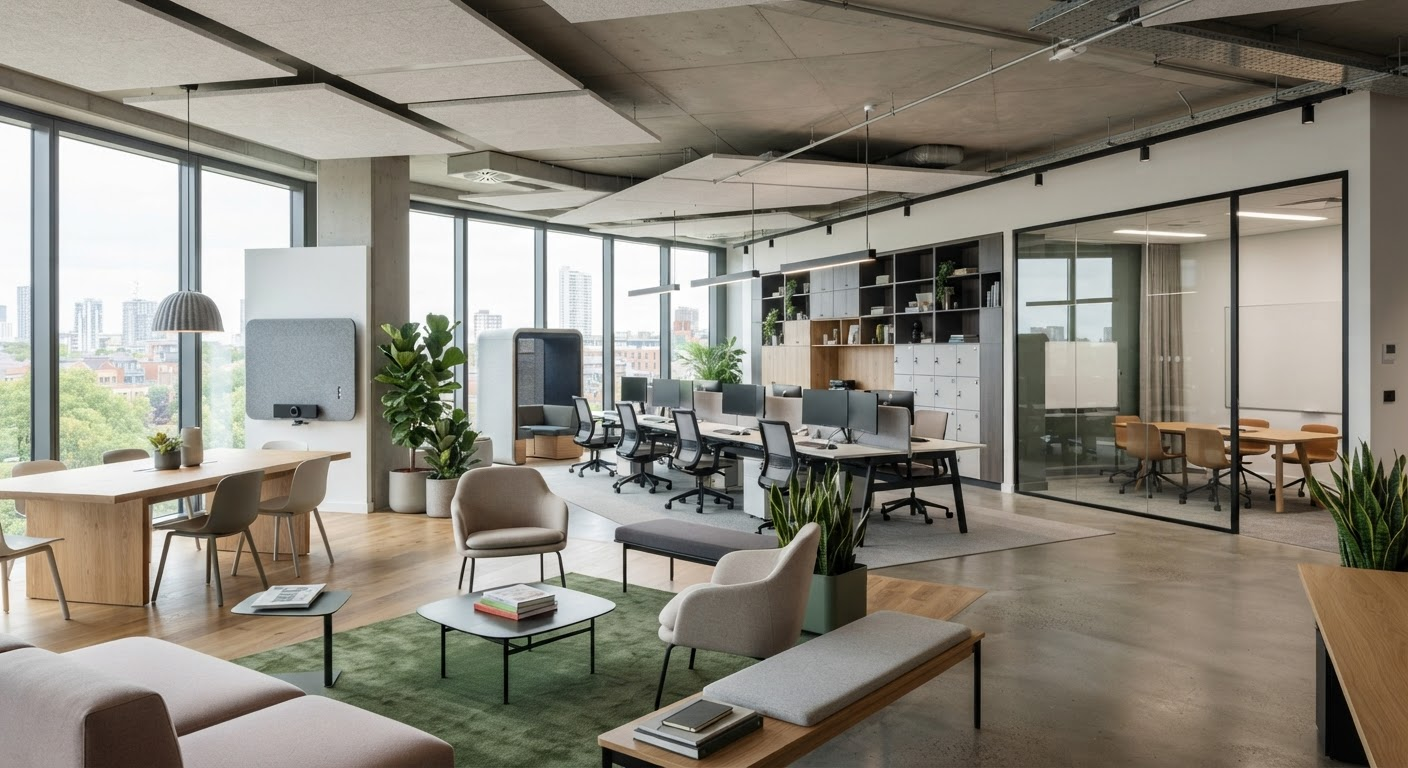
1. Start With the Workplace, Not the Furniture

One of the biggest mistakes businesses make is assuming the furniture is the problem.

Sometimes it is.

Often, it isn’t.

Imagine walking into an office where employees regularly complain they don’t have enough room to work. The instinctive reaction is to buy larger desks or rent a bigger office.

But spend an hour watching how the workplace actually functions and you might discover something completely different.

Perhaps filing cabinets occupy valuable floor space because paperwork hasn’t been reviewed for years.

Perhaps departments that constantly work together are positioned at opposite ends of the office.

Perhaps meeting rooms are being used as permanent offices because there aren’t enough quiet spaces.

None of those problems are solved by buying new desks.

Good office furniture starts with understanding how the workplace operates today.

Before looking at a single product, ask yourself:

  • What is the problem we’re trying to solve?
  • Is our current furniture no longer fit for purpose, or is the layout holding us back?
  • How do our employees actually use the office each day?
  • What would we like our workplace to do better?

When you understand the workplace, choosing the furniture becomes much easier.

2. Buy for the Business You're Becoming

Office furniture should never be chosen solely for today’s needs.

Businesses evolve.

Teams grow.

Departments change.

Hybrid working continues to influence how offices are used, and many organisations now require spaces that can adapt rather than remain fixed for years.

It’s surprising how many businesses invest in furniture that perfectly suits twenty employees, only to recruit five more people within twelve months and discover the office no longer works.

Future growth doesn’t always mean needing a larger office.

Sometimes it simply means choosing furniture that offers greater flexibility.

Modular desks, adaptable storage solutions and meeting spaces that can serve multiple purposes often provide significantly better long-term value than highly specialised furniture that only works in one layout.

When making any furniture decision, ask yourself a simple question:

Will this still work for our business three to five years from now?

If the answer is uncertain, it may be worth reconsidering the investment.

3. Think About the People Who Use It

Office furniture isn’t purchased for buildings.

It’s purchased for people.

That sounds obvious, yet it’s often forgotten during the buying process.

The managing director may spend only a few hours each day at their desk, while another member of staff may spend seven or eight hours there. Their requirements are unlikely to be the same.

A receptionist has different priorities to someone working in finance.

A sales team collaborates differently to an accounts department.

The best workplaces recognise those differences rather than assuming every employee should work in exactly the same environment.

Comfort also plays a much greater role than many businesses appreciate.

Employees who are comfortable tend to remain focused for longer, feel more positive about their workplace and experience fewer frustrations throughout the working day.

That’s one of the reasons ergonomic furniture has become increasingly important.

It isn’t about creating luxury.

It’s about creating a workplace that supports people in doing their best work.

How to Choose Office Furniture

4. Quality Is Remembered Long After Price Is Forgotten

Every business has a budget.

There’s nothing wrong with comparing prices.

The mistake is believing that purchase price represents value.

Office furniture is used every day.

Desks support computers, paperwork and equipment for years.

Office chairs are used for thousands of hours during their lifetime.

Meeting tables host countless conversations that shape the future of a business.

When furniture is expected to perform that consistently, durability matters.

Well-built furniture often delivers significantly better value over its lifetime than cheaper alternatives that require frequent repairs or replacement.

Instead of asking:

“What’s the cheapest option?”

Ask:

“Which option gives us the best value over the next ten years?”

It’s a very different question, and it usually leads to better decisions.

5. Every Piece of Furniture Should Have a Purpose

One of the easiest ways to create an inefficient workplace is to buy furniture one piece at a time without an overall plan.

A new cupboard here.

Another desk there.

A different range of chairs because they happened to be on offer.

Over time the office becomes a collection of unrelated purchases rather than a workplace designed to support the business.

Instead, think about how every element works together.

Reception furniture should create the right first impression.

Meeting room furniture should encourage discussion.

Storage should reduce clutter rather than consume valuable space.

Workstations should allow employees to work comfortably throughout the day.

When every decision supports a wider objective, the workplace feels more organised, more professional and ultimately more productive.

The Lomas Office Furniture Buying Checklist

Before committing to any purchase, take a final step back and review your decisions.

Have you clearly identified the problem you’re trying to solve?

Have you planned the workplace before selecting the furniture?

Have you considered how the business may change over the next few years?

Does the furniture support the people who will use it every day?

Have you balanced quality with long-term value rather than simply choosing the lowest price?

Does each piece of furniture contribute to a better workplace rather than simply filling an empty space?

If the answer to each of those questions is yes, you’re likely to make a far better investment than if you started with a catalogue alone.

How to Choose Office Furniture

Common Mistakes to Avoid

After helping businesses create better workplaces, the same mistakes appear time and time again.

The first is buying furniture before understanding the workplace.

The second is choosing solely on price without considering long-term value.

Another common mistake is failing to involve employees in the process. The people using the furniture every day often provide the most valuable insight into what works and what doesn’t.

Finally, many businesses underestimate the importance of planning for growth. Furniture that works perfectly today may become restrictive surprisingly quickly if the organisation expands.

Avoiding these mistakes doesn’t necessarily require a bigger budget.

It simply requires better decisions.

Where Do You Go From Here?

Choosing office furniture isn’t about finding the latest trends or the most expensive products.

It’s about creating a workplace that helps your business operate more effectively.

The right furniture should support your employees, reflect your organisation and adapt as your business grows.

If you begin with the workplace rather than the catalogue, you’ll almost always make better decisions.

That’s the philosophy we follow at Lomas Office Furniture & Stationery.

Because better workplaces don’t start with better furniture.

They start with better thinking.

We are using cookies to give you the best experience. You can find out more about which cookies we are using or switch them off in privacy settings.
AcceptPrivacy Settings

GDPR