

The beginning of a new school year brings energy, anticipation and a long list of practical jobs.
For pupils, it means new classes, new teachers and new opportunities. For the people responsible for preparing the school, it means making sure every classroom is organised, properly equipped and ready to support learning from the first day.
It is often only when staff and pupils return that overlooked problems become obvious.
A classroom may not have enough chairs for the new intake. Storage that appeared adequate during the holidays can quickly overflow with books, supplies and teaching materials. Everyday stationery disappears faster than expected, while worn tables and damaged furniture become difficult to ignore once rooms are being used again.
The start of term therefore provides a valuable opportunity to review how well each classroom is working.
Schools do not always need to replace everything. Targeted improvements to furniture, storage and supplies can make the environment easier to manage without requiring a complete refurbishment.
Begin With How the Classroom Is Used
A successful classroom should support the activities that take place within it.
Some lessons require pupils to work independently. Others involve group discussions, practical activities or movement between different areas. Teachers may need space for demonstrations, displays, equipment and confidential records.
Furniture should reflect these requirements.
A room filled with identical tables may provide plenty of individual workspaces but make group activities difficult. Very large tables can restrict movement, while furniture that is unnecessarily heavy may prevent staff from changing the layout.
The age of the pupils also matters. Tables, chairs and storage must be appropriately sized and suitable for the expected level of use.
Before ordering new furniture, schools should consider what is working well and where difficulties occur during an ordinary day. Teachers and support staff can provide useful insight because they understand how the rooms are actually used.
The aim is not simply to make the classroom look refreshed. It is to create an environment that supports teaching, learning and everyday organisation.
Reviewing Classroom Furniture
School furniture experiences demanding daily use.
Tables and chairs are moved repeatedly, storage units are opened throughout the day and surfaces must withstand books, equipment, cleaning and practical activities.
The beginning of the academic year is a sensible time to review the condition of these products.
A scratched surface does not necessarily mean a table requires replacement. Cosmetic wear may be acceptable when the item remains stable and suitable for use.
Structural problems need more attention. Loose frames, damaged edges, unreliable mechanisms or furniture that rocks during use can disrupt lessons and may require repair or replacement.
Schools should also consider whether the furniture still suits the pupils and curriculum. An item can remain physically intact while no longer meeting the classroom’s requirements.
Existing furniture may be reused or moved to a different area when appropriate. This can reduce costs and waste, provided its condition and dimensions are suitable.
Classroom Tables
Tables influence how easily a classroom can adapt to different activities.
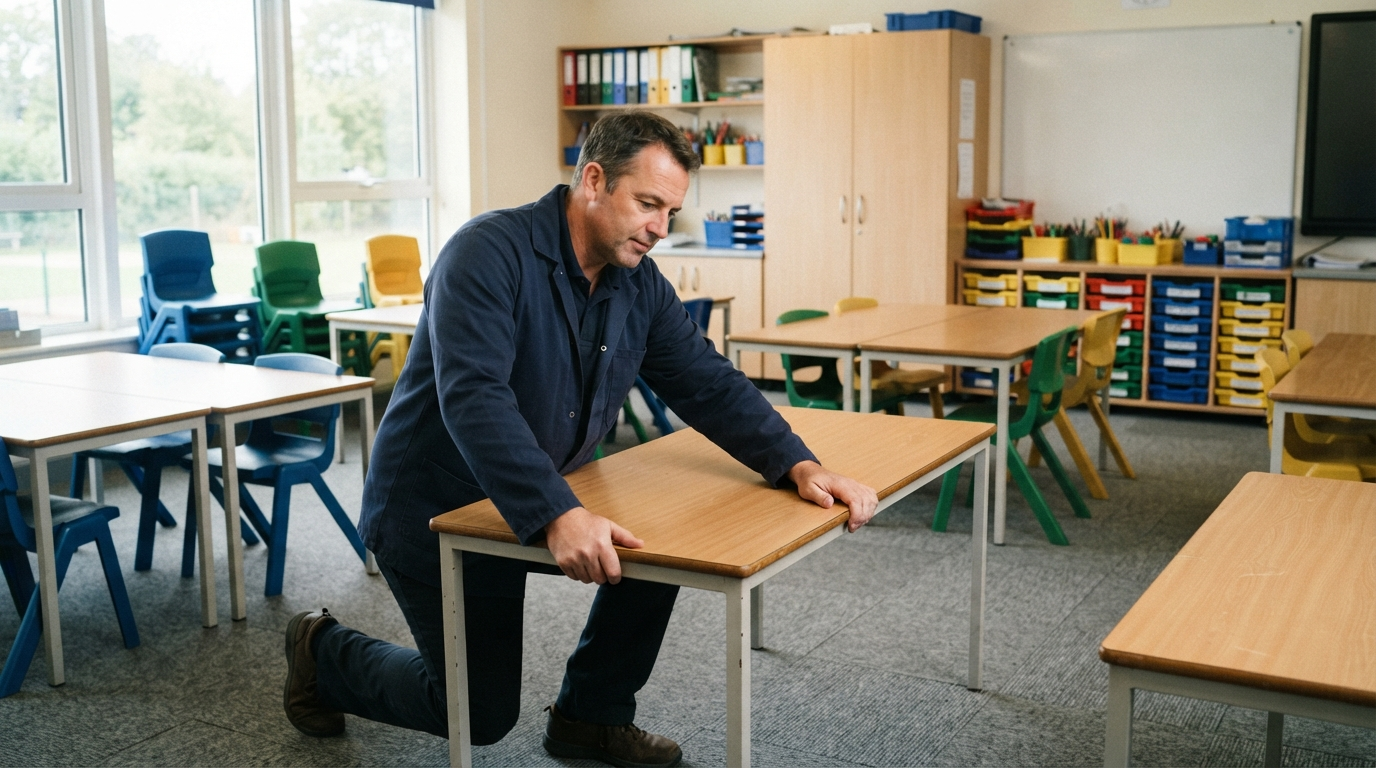
Traditional rectangular tables remain practical because they can be arranged individually, in rows or in groups. Trapezoidal and shaped tables can support collaborative layouts, although the benefit depends on how frequently the room is reconfigured.
Flexibility should be realistic.
Furniture described as modular provides little value when it is too heavy for staff to move safely or when there is nowhere to store unused items. The classroom needs a dependable everyday arrangement, with the ability to change it when teaching requires something different.
Table size should balance usable work surface with available floor space. Pupils need enough room for books and equipment, but oversized furniture can reduce circulation and make the classroom feel crowded.
The position of legs and frames matters too. A table may provide sufficient surface area while restricting how chairs can be positioned beneath it.
Durability, cleanability and the ability to obtain matching products later should all be considered alongside shape and colour.
Classroom Seating
School chairs should be appropriately sized, stable and suitable for the length of time pupils will use them.
A chair designed for younger children will not support older pupils correctly, even if it still fits beneath the table. Schools may need several sizes across different year groups.
Comfort matters because pupils are expected to remain seated while listening, reading, writing and completing other tasks. However, classroom seating must also be practical to move, maintain and clean.
Stackable chairs can simplify cleaning and allow rooms to be cleared for alternative activities. The stacking method should be manageable, and the stored chairs should not obstruct circulation.
In specialist teaching areas, a different type of seating may be required. Stools, laboratory chairs and ICT seating should be selected according to the activity rather than used as general-purpose replacements.
For staff offices and workstations, adjustable task chairs are normally more appropriate than classroom seating. The chair should be considered alongside the desk, computer equipment and amount of time the employee remains seated.
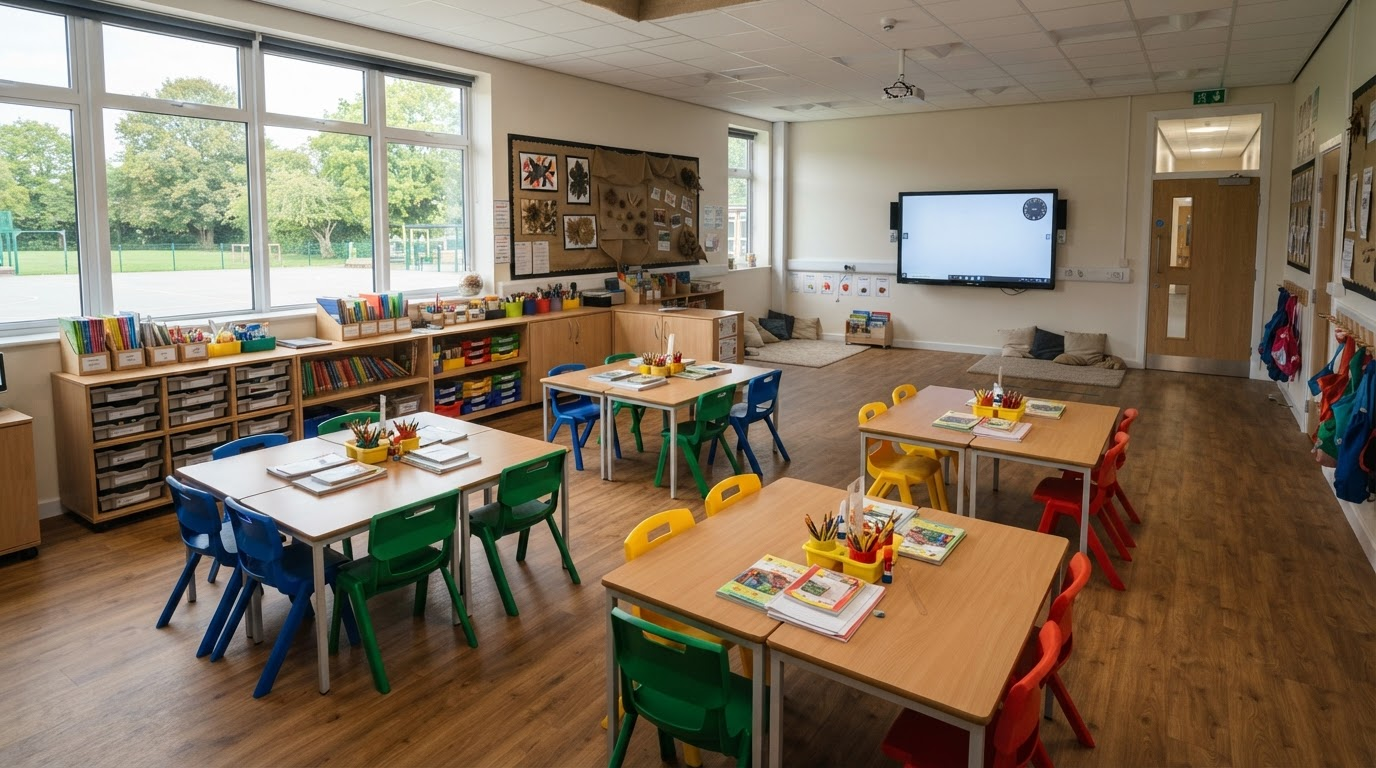
Storage That Supports the School Day
Good classroom storage reduces clutter and helps pupils and staff find what they need.
It can also protect teaching time. When resources have a clear location, less time is spent searching for equipment or moving items between rooms.
The right storage depends on what needs to be kept.
Books, stationery, art materials, pupil work and specialist equipment all have different requirements. Some items need to remain visible and accessible, while others should be stored securely.
Low-level classroom storage can allow pupils to access everyday materials and may help maintain visibility across the room. Taller cupboards offer greater capacity but should be positioned carefully so they do not restrict light or movement.
Mobile units can support flexible learning areas when there is a genuine need to move resources. They should remain stable during use and have a clear place when they are not required.
Lockable storage may be needed for confidential records, valuable equipment or products that should only be accessed by staff.
Before adding more cupboards, schools should review what is already being stored. Outdated materials and broken equipment should not determine the amount of furniture purchased for the new year.
Making Better Use of Limited Space
Many schools need to work within classrooms that cannot easily be enlarged.
A lack of space does not always mean more compact furniture is the only answer. The complete arrangement should be reviewed.
Poorly positioned cupboards can create narrow walkways. Different furniture styles accumulated over several years may not fit together efficiently. Resources used occasionally may occupy the most accessible parts of the room.
A space plan can help schools test alternative arrangements before ordering furniture.
It should account for the number of pupils, teaching position, storage, displays, technology and movement around the classroom. Doors, windows, radiators and fixed equipment also affect what is possible.
Circulation must remain practical. Pupils and staff should be able to enter, leave and move around without navigating unnecessary obstacles.
The strongest layout is not always the one that accommodates the greatest quantity of furniture. It is the one that supports the class safely and effectively.
Stationery for the Term Ahead
Furniture creates the physical classroom, but everyday supplies keep it working.
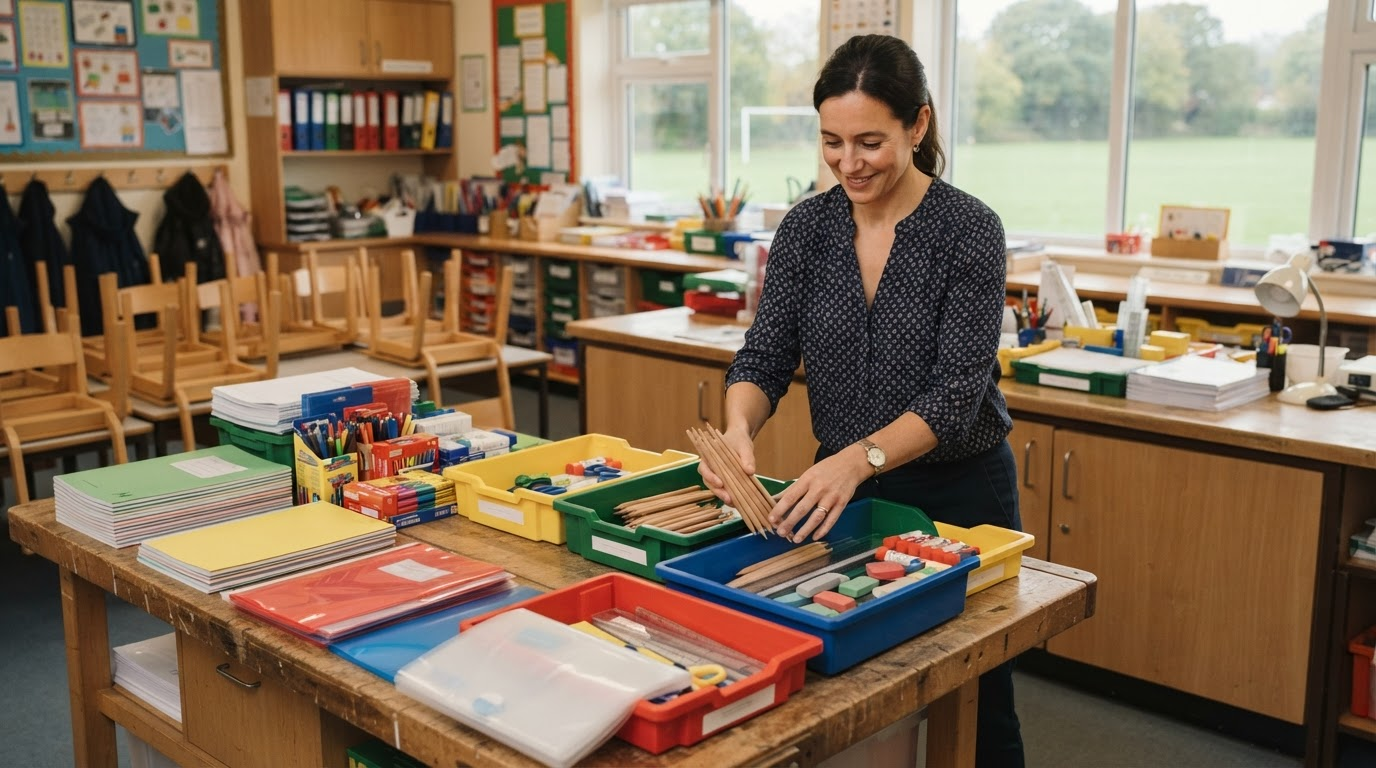
Paper, pens, pencils, exercise books, folders, labels and other essentials are used continuously. Small shortages can become repeated interruptions when teachers need to search for items or borrow supplies from elsewhere.
Ordering for the new term should begin with actual usage rather than simply repeating the previous order.
Changes in pupil numbers, subjects and working practices may affect what is required. Products that remain unused each year should not continue to be purchased automatically, while frequently depleted items may need different order quantities.
A central overview can help the school avoid duplication between departments. It may also identify opportunities to standardise commonly used products.
Standardisation does not mean every department must use exactly the same materials. It means agreeing sensible core products while allowing specialist teams to order what their work genuinely requires.
Reliable supply is often as important as the lowest individual price. Delayed or incomplete orders can create additional administration and emergency purchasing.
Paper, Ink and Printing Supplies
Printing remains an important part of school administration and classroom activity.
Paper and ink should be monitored carefully because shortages can affect several departments at once. At the same time, excessive stock takes up valuable storage and ties up budget.
Schools should confirm that ink and toner products are compatible with the equipment in use. Where several printer models exist, clear records can help prevent incorrect products from being ordered.
Storage conditions matter. Paper should be kept dry and organised so older stock is used first.
Usage may change as more work moves online, but this should be measured rather than assumed. Some year groups, subjects and administrative processes will continue to rely heavily on printed materials.
A dependable ordering system helps maintain appropriate stock without filling cupboards with supplies that may take years to use.
Offices, Staffrooms and Administrative Areas
Back-to-school preparation should include staff workplaces as well as classrooms.
Administrative employees may spend significant periods at computer workstations, requiring suitable desks, adjustable chairs and accessible storage.
Staffrooms need to support breaks, informal conversations and sometimes individual work. Furniture intended only for short-term waiting areas may not be appropriate when staff use the space throughout the day.
Meeting rooms should accommodate the number of people who usually attend rather than the largest possible meeting. Oversized tables can make small rooms difficult to use.
Storage for pupil records and administrative documents may require security and privacy. The position of monitors and filing areas should also be considered where visitors or pupils pass through the space.
A well-organised staff environment helps the wider school operate more effectively.
Planning for Growth and Change
School requirements change during the life of the furniture.
Pupil numbers may increase, rooms may change purpose and new technology may alter how lessons are delivered. Furniture should have enough flexibility to respond to likely changes.
Standard products and finishes can make future additions easier to match. Modular storage and tables may also allow rooms to be adapted without replacing everything.
However, schools should avoid purchasing large quantities of furniture purely for uncertain future needs.
The priority is to create a classroom that works now while retaining a sensible response to realistic change.
Durability supports this flexibility. Furniture that remains stable, maintainable and suitable for different layouts is less likely to require premature replacement.
Creating a Consistent School Environment
Furniture and storage do not need to be identical throughout the school, but a degree of consistency has practical benefits.
Using coordinated ranges can simplify future purchases, repairs and movement between rooms. It also creates a more orderly appearance across classrooms and shared spaces.
Different areas can still have their own identity. Early-years rooms, secondary classrooms, libraries and administrative offices perform different functions and may require different furniture.
Colour can help create welcoming environments or distinguish particular areas. It should be considered alongside durability and the likelihood of matching products during future additions.
The objective is a school that feels coordinated rather than one assembled from unrelated purchases made in isolation.
Avoiding Back-to-School Buying Mistakes
The pressure to prepare quickly can lead to short-term decisions.
One common mistake is ordering furniture without confirming the available dimensions. A table or cupboard may fit into the room while leaving insufficient space for movement.
Another is choosing products according to price alone. Furniture designed for light or occasional use may not provide good value in a busy classroom.
Schools can also purchase too much storage without reviewing its contents or order supplies based on habit rather than actual usage.
Late orders may reduce product choice and create pressure around delivery. Access arrangements, assembly and the removal of old furniture should be confirmed before products arrive.
Planning does not need to become complicated. A clear understanding of the room, users and essential requirements prevents many avoidable problems.
A Practical Review After the First Weeks
The first weeks of term provide the best test of whether a classroom works.
Teachers can see which storage areas are difficult to access, whether tables support different lesson formats and where supplies are being used faster than expected.
Small adjustments may solve many issues. Furniture can be repositioned, storage responsibilities clarified or order quantities changed.
This review also creates useful information for the next purchasing cycle. Instead of relying on memory at the end of the year, schools can record problems and successful changes while they are visible.
The objective is continuous improvement rather than waiting until furniture fails or shortages become urgent.
Furniture, Storage and Stationery for Lancashire Schools
At Lomas Office Furniture & Stationery, we help schools across Blackburn and Lancashire prepare practical, organised learning and working environments.
We can support schools with classroom tables and seating, office furniture, storage solutions, paper, ink and everyday stationery.
Our team can help review requirements, select appropriate products and coordinate delivery. For larger furniture projects, space planning and professional installation can help ensure everything works within the available room.
Whether the school requires additional supplies after the first weeks of term, replacement furniture or a more organised approach to storage, Lomas can provide support from one trusted local supplier.
Speak to our team about preparing your classrooms, staff areas and school offices for the year ahead.