
An office can gradually stop working well without anyone making a conscious decision to change it.
Teams grow, technology develops and working patterns shift. Desks are added wherever they fit, storage spreads into spare corners and meeting rooms become multipurpose spaces. Individually, these changes may appear harmless. Together, they can create a workplace that makes everyday tasks more difficult.
Here are seven signs that your office may no longer suit the people using it.
1. People Avoid Certain Areas
Unused space is not always unnecessary space. It may simply be uncomfortable or unsuitable.
A meeting area could be too noisy, a bank of desks may have poor lighting or an informal breakout space might lack the power and furniture required for real work.
Pay attention to where employees naturally choose to sit and which areas remain empty. Their behaviour can reveal problems that would not be obvious from a floor plan.
Before removing an underused area, ask why people are avoiding it.
2. Meeting Rooms Are Constantly Booked
A shortage of meeting rooms does not necessarily mean you need more large boardrooms.
Employees may be using formal rooms for private telephone calls, short conversations or video meetings because no suitable alternatives are available.
Smaller meeting rooms, acoustic booths and informal collaboration areas can relieve this pressure. The aim is to provide different spaces for different activities rather than expecting one room to handle everything.
It is also worth reviewing how existing rooms are furnished. An oversized table can make a room less flexible and reduce the number of ways it can be used.
3. Noise Has Become a Regular Complaint
A lively office can be positive, but constant disruption makes concentrated work difficult.
Noise problems frequently arise when collaborative activities take place beside employees who need to focus. Hard surfaces and a lack of acoustic materials can then allow sound to travel throughout the office.
The solution may involve changing the layout rather than simply asking people to speak more quietly. Acoustic screens, upholstered furniture and designated areas for conversations can all help.
Confidentiality matters too. If private calls can be heard across the office, employees may need access to enclosed rooms or acoustic booths.
4. Storage Is Taking Over the Workplace
When documents, stationery and equipment no longer have a clear home, clutter quickly begins to affect the office.
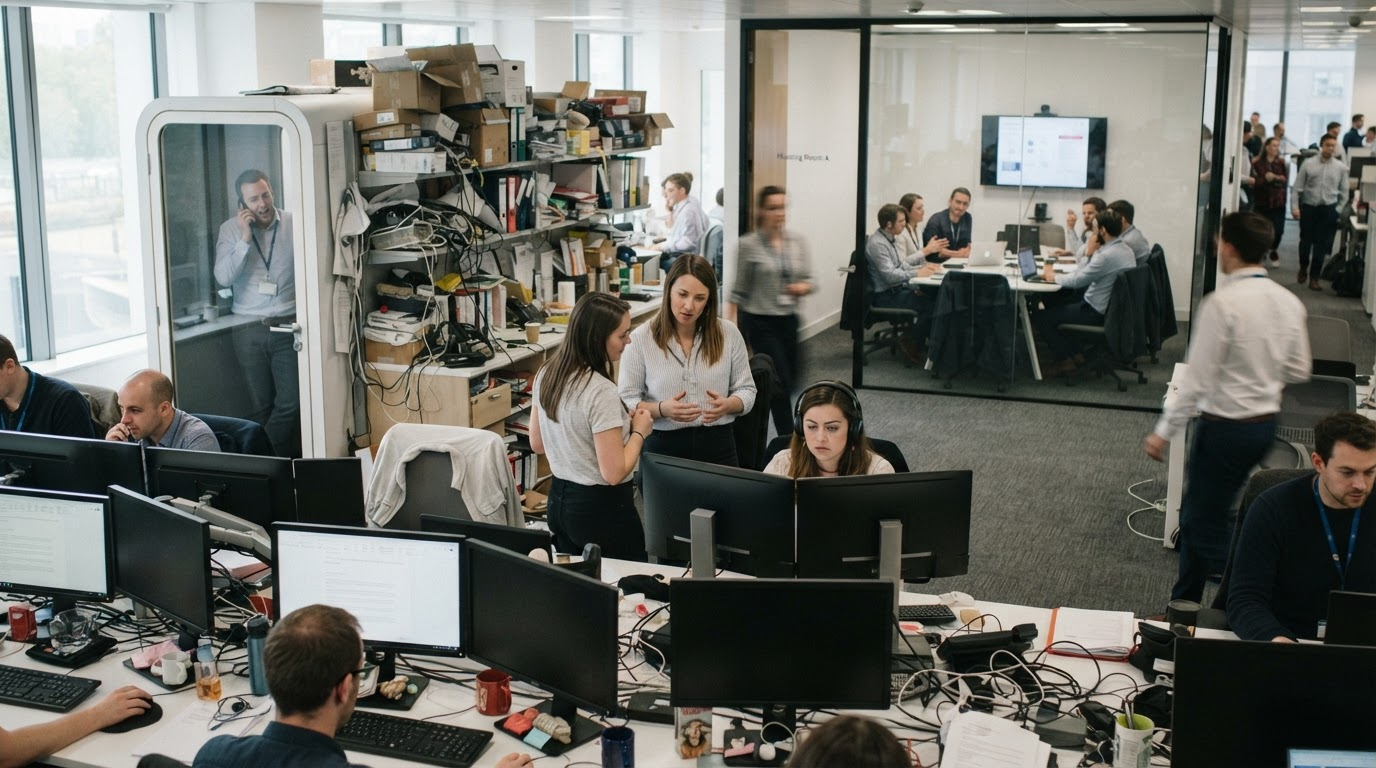
Boxes appear beneath desks, cabinets block walkways and spare rooms become improvised storerooms. Apart from making the workplace look untidy, poor storage can waste time and restrict useful floor space.
Review what genuinely needs to remain in the office. Some documents may be archived or digitised, while frequently used items should be stored close to the people who need them.
The right storage can also help structure an open office by creating boundaries between teams without introducing permanent walls.
5. The Furniture No Longer Suits Its Users
Office furniture is used repeatedly for long periods, so small shortcomings can become significant daily frustrations.
Employees may struggle to adjust their chairs, desks might not provide enough working space or meeting tables may lack accessible power. Furniture purchased at different times can also leave the office feeling inconsistent and poorly planned.
This does not automatically mean everything needs replacing. Existing furniture should be assessed before decisions are made. Suitable items may be retained, relocated or used differently, allowing the budget to be focused on areas where improvement is most needed.
6. Hybrid Working Has Changed Attendance Patterns
An office planned for full-time attendance may not reflect how the organisation now operates.
Some businesses find they have too many permanent desks but not enough meeting and collaboration space. Others reduce workstation numbers based on average attendance, only to discover that everybody wants to use the office on the same days.
Look at peak attendance rather than relying on weekly averages. You should also consider why employees come into the office and what they need when they arrive.
A hybrid workplace still needs to support individual work. It should also provide dependable technology, spaces for video calls and areas where teams can work together effectively.
7. There Is No Room for the Business to Change
A workplace should support future plans as well as current requirements.
If recruiting one new employee creates a furniture puzzle, or every departmental change requires desks to be dismantled and moved, the layout may be too rigid.
Flexible furniture can make future adjustments easier. Modular tables, movable storage and adaptable desk arrangements allow the office to respond as teams and working practices develop.
Future planning does not mean leaving large areas empty. It means making choices that preserve your options.
What Should You Do Next?
Start by listening and observing.
Ask employees which parts of the workplace help them and which cause frustration. Review meeting-room demand, storage requirements and attendance patterns. Look at how people move through the office and where interruptions occur.
This initial review may reveal opportunities for relatively simple improvements. Repositioning furniture, changing how a room is used or creating a quiet working area could make a noticeable difference.
Where several problems overlap, a professional office survey and space plan can help you understand the available options before committing to new furniture or refurbishment work.
Improve Your Workplace With Lomas Office
Lomas Office helps businesses in Blackburn and across Lancashire create practical working environments that reflect how their teams operate.
We can assess your existing office, identify areas for improvement and help with space planning, office furniture, storage and complete refurbishment projects.
If your workplace no longer supports your team, speak to Lomas Office about making better use of the space you already have.