Ongoing DSE Support for Employers and Employees

Ongoing DSE Support for Employers and Employees

A DSE assessment is most valuable when its recommendations lead to action.

Workstations change, employees move roles and new equipment is introduced. Hybrid workers may divide their time between several locations, while hot-desking means settings can change every day.

Ongoing DSE support helps employers manage these changes and ensures employees know how to use their workstations correctly.

Lomas Office supports businesses in Blackburn and across Lancashire with workstation setup, equipment recommendations and follow-up guidance for office, home and hybrid workers.


DSE Support Beyond the Initial Assessment

An assessment records the employee’s workstation, identifies potential risks and recommends appropriate improvements.

The next stage is making sure those improvements are implemented.

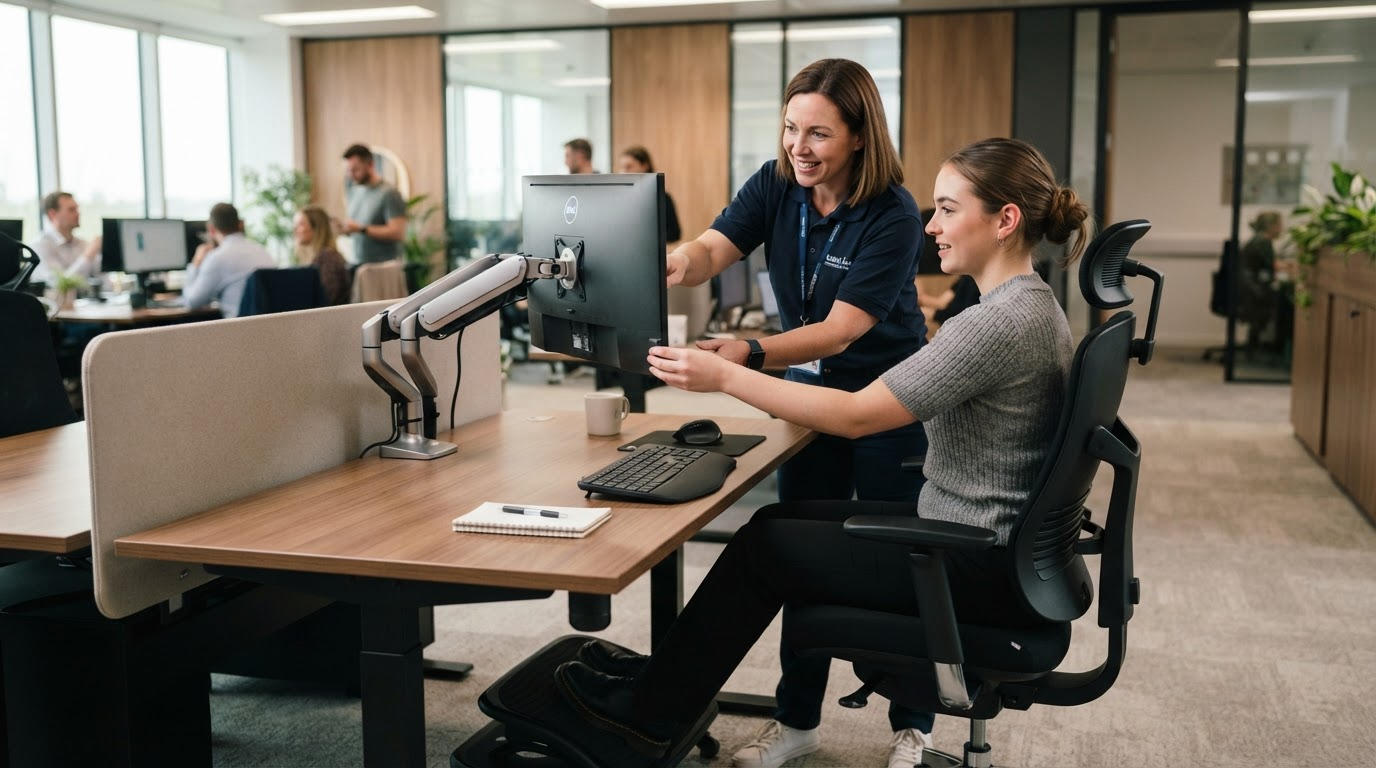
Some actions may be completed immediately by adjusting the chair, moving the screen or reorganising equipment. Other recommendations may involve providing a monitor arm, footrest, separate keyboard or more suitable task chair.

The employee may then need help setting up and using the equipment. Simply delivering a product does not ensure it will be adjusted correctly or resolve the original issue.

Ongoing support connects the assessment, action and outcome.

Helping Employees Use Their Equipment

Even highly adjustable furniture offers limited benefit when employees do not understand how to use it.

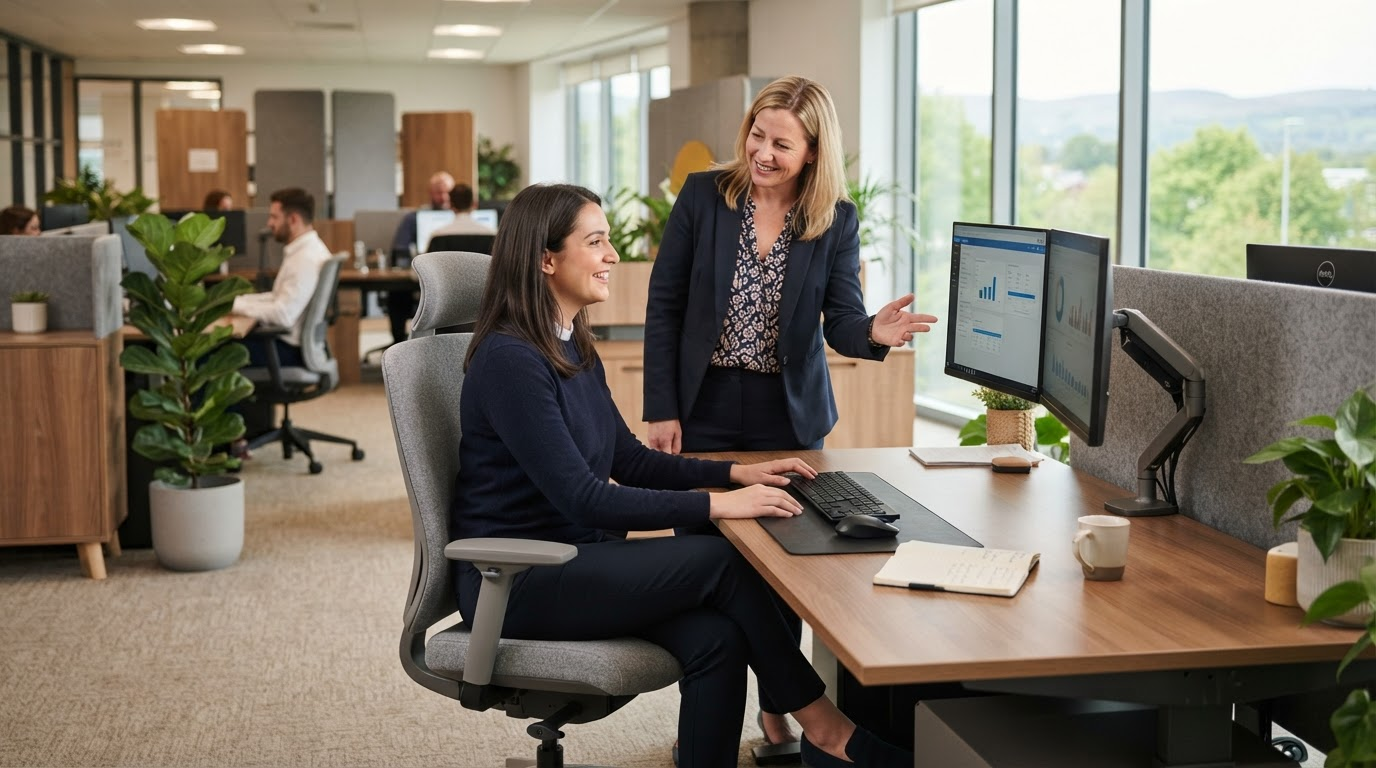
Chair controls are frequently left in the position chosen by a previous user or adjusted once and then forgotten. Monitor arms may be installed but never repositioned, while laptop stands are sometimes supplied without the separate keyboard and mouse needed to create a practical setup.

Clear guidance helps employees understand why an adjustment matters and how they can adapt the workstation themselves.

This is particularly important in shared offices. Employees should be able to complete a simple setup routine whenever they begin work at a different desk.

Support for New Starters

A new employee should not inherit a workstation without checking whether it is suitable for them.

The previous occupant’s chair and screen settings are unlikely to match the new user. Their role may also involve different equipment, tasks and amounts of screen-based work.

Including a basic DSE review in the onboarding process gives the employee an opportunity to raise concerns and learn how to adjust the workstation.

Where a new starter has known individual requirements, these should be discussed early enough for appropriate arrangements to be made before or soon after they begin work.

Ongoing DSE Support for Employers and Employees

Managing Office Moves and Equipment Changes

DSE arrangements should be reviewed when employees move desks, departments or working locations.

An office relocation or refurbishment can introduce different furniture, lighting and workstation layouts. New monitors, laptops or telephone systems may also change the way an employee works.

These changes do not always require a completely new assessment, but employers should check whether the previous findings remain relevant.

Planning DSE requirements as part of an office project is usually more effective than trying to correct unsuitable workstations after the new space has opened.

Supporting Home and Hybrid Workers

Hybrid working has made DSE management more complex because one employee may regularly use several workstations.

A suitable office desk does not compensate for an unsuitable home setup. Both locations should allow the employee to work in a comfortable and sustainable way.

Home-working support might involve helping the employee position existing equipment, providing accessories for regular laptop use or identifying furniture that fits the available space.

Recommendations should remain proportionate to the work being performed and the time spent at each location.

Employees should also know who to contact when their arrangements change or they begin to experience difficulty.

DSE Support for Hot-Desking

Hot-desking works best when furniture and equipment can accommodate different users.

Task chairs should be adjustable, monitors should be easy to reposition and desk areas should allow employees to arrange their equipment without difficulty.

However, adjustable equipment alone is not enough. Employees need to understand how to reset a workstation at the beginning of the day.

Some individuals may not be suited to unrestricted hot-desking. An employee with specialist equipment or particular requirements may need a designated workstation or a dependable way to access the correct setup.

These decisions should be based on the employee’s needs rather than a rigid workplace policy.

Ongoing DSE Support for Employers and Employees

Equipment Recommendations With a Clear Purpose

The phrase “ergonomic equipment” is widely used, but no product is automatically suitable for every person.

Equipment should be recommended to address an identified requirement. A footrest may be useful when an employee cannot place their feet comfortably on the floor after the chair has been correctly adjusted. A monitor arm can help where the existing stand does not provide enough movement. An alternative mouse may be considered when standard equipment cannot be used comfortably.

The same principle applies to office chairs and desks.

Before new furniture is selected, the employer should understand what needs to change and why. This creates a clearer specification and reduces the risk of purchasing products that do not solve the problem.

Following Up on Recommended Changes

Once an improvement has been made, the employee should have an opportunity to use the new arrangement and provide feedback.

A follow-up can confirm whether the original problem has been addressed and whether the equipment has been set up correctly. Minor refinements may be needed after the employee has worked with it for a period.

The outcome should be recorded, along with any outstanding action.

If discomfort continues despite reasonable workstation improvements, the employer may need to seek further advice from occupational health, a medical professional or an appropriately qualified ergonomics specialist.

A DSE assessment and furniture supplier should not attempt to provide a medical diagnosis.

Keeping DSE Records Manageable

DSE documentation should help the employer manage action rather than create unnecessary administration.

A useful record shows who was assessed, when the assessment took place, the working locations covered, which issues were identified and what action was agreed.

It should also record who is responsible for each action and whether it has been completed.

Assessments should be reviewed when there is a meaningful change rather than repeated simply to produce another identical form. Employers should still maintain a reliable process for employees to report problems between reviews.

Training and Information for Employees

Employees need sufficient information to use their workstations appropriately.

This should include how to adjust the chair and equipment, how to position the screen and input devices, and the importance of movement and changes of activity.

They should also understand how to report discomfort, request a DSE review and ask for an eye and eyesight test where the regulations apply.

Training does not need to be complicated. Short, practical guidance connected to the employee’s real workstation is often easier to apply than general information delivered without context.

Ongoing DSE Support for Employers and Employees

Supporting Employees With Individual Requirements

Some employees may require more detailed support.

A disability, health condition, injury, pregnancy or change in mobility may affect how someone uses their workstation. The appropriate response will depend on the individual rather than the name of the condition alone.

The employee should be involved in discussions about their needs and any proposed changes.

Where requirements fall outside a routine DSE assessment, the employer may need support from occupational health, Access to Work, a medical professional or a specialist ergonomist.

A Practical DSE Process for Employers

Effective DSE management can follow a straightforward sequence.

First, identify employees and working locations that require assessment. Complete the assessment and agree proportionate actions. Make adjustments before replacing equipment, then provide any additional products that are genuinely required.

Help the employee set up the improved workstation and check whether the changes have worked.

Finally, keep the assessment under review as roles, equipment and working arrangements develop.

This creates an ongoing process rather than a collection of forms that are completed and forgotten.

DSE Support From Lomas Office

Lomas Office helps organisations manage the practical actions that follow a DSE assessment.

We can assist with workstation adjustments, ergonomic equipment recommendations, furniture selection and correct setup. Support can be provided for individual employees, office teams and home or hybrid workers.

Our approach begins with understanding what the employee needs and making effective use of existing equipment wherever possible.

Speak to Lomas Office about ongoing DSE support for your organisation in Blackburn or across Lancashire.

Frequently Asked Questions

What happens after a DSE assessment?

The recommended actions should be agreed, prioritised and completed. The employee may also need help setting up equipment, followed by a check that the changes have worked.

Do new employees need a DSE assessment?

New DSE users should have their workstation reviewed rather than automatically inheriting the previous employee’s setup.

Can Lomas help after another company has completed the assessment?

Yes. Lomas can help review equipment recommendations, select appropriate products and support workstation setup, subject to the information provided.

Should home and office workstations both be considered?

Yes, when an employee regularly works in both locations. Each setup should be suitable for the work being completed there.

Does ergonomic equipment solve every DSE problem?

No. Equipment must be appropriate for the individual and correctly adjusted. Working habits, tasks and the wider environment also need to be considered.

When should specialist advice be requested?

Further advice may be appropriate where an employee has persistent discomfort, a medical condition, a disability or complex requirements that fall outside a routine DSE assessment.

We are using cookies to give you the best experience. You can find out more about which cookies we are using or switch them off in privacy settings.
AcceptPrivacy Settings

GDPR